
This spring and summer, I was delighted to collaborate with Ningbo’s JIAZAZHI, a local art space and publisher of photography books, to present two films by Ted Fendt, Classical Period (2018) and Short Stay (2016), which brought me this great opportunity to speak to this filmmaker, now based in Berlin and is shooting his next film. I got into speak with him about his production process, working with actors, direct sound and light, as well as his work as a projectionist and translator, working on such œuvres by Straub-Huillet, Jean-Luc Godard and Nicole Brenez.
by TWY
Ted Fendt (TF): I tried to find your city on the map, and the gallery where the film was screened.
TWY: I am delighted to hear that. It’s JIAZAZHI’s first film screening in a while, and people responded quite well. Here in Ningbo, screenings like this were quite rare, and we are not as culturally fortunate as other cities such as Beijing or Shanghai. There are great stuff in Wuhan though, which had hosted your films before. In any case, I thought we could begin with Classical Period, but I just rewatched Outside Noise as well, so we can talk about that as well.
TF: Okay.
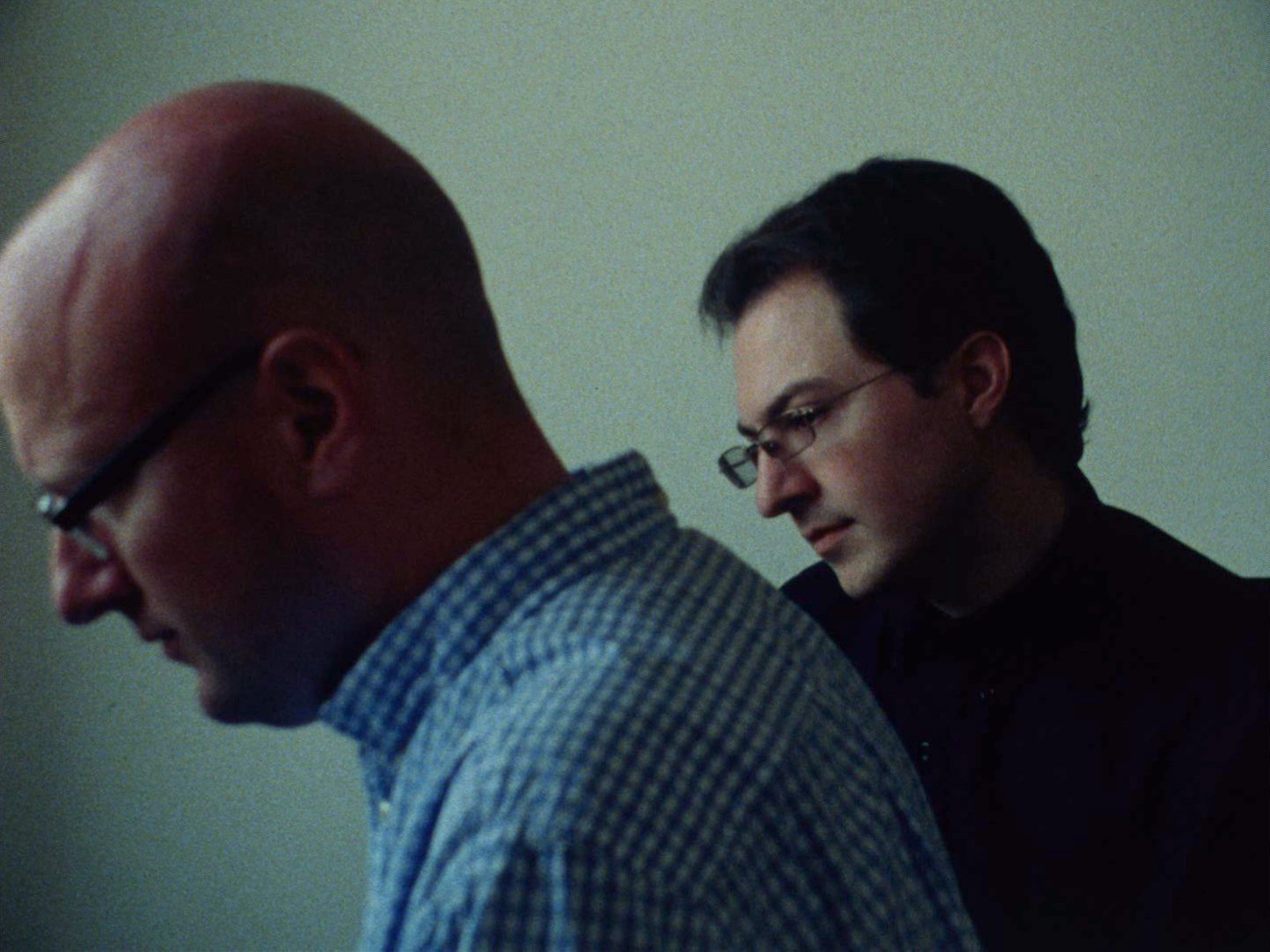
TWY: Let’s start with one of the final scenes in Classical Period, the musical performance, where several characters play Beethoven’s Trio in C Minor. That moment really seems to encapsulate the whole film for me structurally. As one of our audience members pointed out, that scene is also one of the few where Cal was completely silent. He simply listens, first to the music, then to Sam as he explains the piece. I’m curious how that scene came into being, and how the actors are brought in for it.
TF: I was looking for people who could participate in the book group and Cal recommended this guy Sam, the bald guy. He had known him through an actual book group they were in together. I met Sam for coffee and we talked about his interests. He’s a lawyer by profession and he mentioned, among other things, his paintings: all the paintings in the apartment are by him, and he is a musician, too. He plays piano and trumpet. I asked him what kind of music he is interested in. We were initially talking about this musician, let me Google him……
It’s a German composer named Max Reger. He is kind of the link between Brahms and Schoenberg, historically, or between Romanticism and Modernism. Initially, I suggested he could play something by Reger in the film, maybe talk about that transitional period, and then Cal would go home and listen to a Schoenberg record, the Variations for Orchestra, Op. 31, which I had on vinyl. Sam said, he had these two friends who could be available to perform in the scene with me, a cellist and a violinist, but playing Reger would have been too complicated and needed more rehearsal. They had been playing Beethoven, so he suggested this piece, which they were more familiar with. I think he also felt more comfortable talking about it. I enjoy listening to classical music and also enjoy hearing people talk intelligently about it. By chance he also used the expression “classical period” in the scene. He didn’t know that was the title of the film yet.
TWY: So that was already the title of the film?
TF: Yeah. The title of the movie was difficult to find. We shot in two sessions: once in March and once in June 2017. I edited and prepared in the months between. One day, I was describing the film to a colleague at work and wondered aloud what I should call the film. He proposed “Classical Period” right away. And I thought it felt right.
TWY: Later, I found the piece online played by other musicians, and I was surprised that it was played in much faster tempo than it was in the film. Was that something you had discussed with Sam and his company?
TF: No, I just let them play as they felt comfortable playing. I didn’t intervene much. My only intervention was placing where they would be sitting, so that they would fit in the shot. But in terms of playing, I just let them play and I didn’t discuss tempo with them. I did discuss the fact the piano was out of tune. Sam had been too busy with work and didn’t have time to get it tuned. He said, “If the other musicians tune to the piano, they will at least be in tune with the piano.“
TWY: That’s really interesting. I also thought that the scene would sound much too fast if it was played in its original tempo. So the result was quite appropriate in relation to the rest of the film. I am also curious about exactly when the scene came about, have you already have the structure mapped out by the time you shot it?
TF: The scene was there from the beginning. I had the idea of making the movie in October 2015, just after I finished editing the previous film (Short Stay). I guess I spent October 2015 through June 2016 with the film in the back of my mind. As time went by, I thought about it more actively and came up with the overall structure or the arc of the story. I had conversations with Cal, looked through old emails from him, and I knew there would be the book group with the character of Evelyn and the other two guys. When I met them, I got other ideas for scenes from our conversations. I knew there would be a split, a gap towards a new season, and that there would be music, and one of the people in the group would leave town, and Evelyn and Cal would discuss that. That was all in the outline, but those were not fully developed scenes yet.
TWY: How did you worked with the actors after that point?
TF: It depends on the scene. There wasn’t a standard procedure. I can give a couple specific examples. For the long scene where they discuss The Divine Comedy, I gave copies of the book to everyone in the scene. I chose which canto they would discuss and then Evelyn and I met at a diner and talked about the canto over coffee. I took a lot of notes and went and wrote a first draft of the dialogue right away. It was basically a combination between her thoughts and my thoughts. Sam was the leader of the group, he would guide them. Chris would ask questions that I had. I left Cal’s dialogue blank. We took that draft and had a rehearsal a week before shooting and Cal filled in the blanks in his dialogue. I recorded all that, transcribed it, and that was the dialogue for the scene, which everyone memorized.
The scene where Cal has the ten-minute monologue about the Jesuit priest was based on a debate that Cal and three other people had at a bar a year before. I asked him to summarize that story and what he thought about it. The script just said: “Cal talks about the Jesuit priest.” On the day of the shoot, I asked him to tell the story so I could time it and see how long it would be. We shot it half an hour later in one take.
For the last scene of the movie, I pretty much wrote it all myself. There was another version which Evelyn rejected. It’s the re-write which was accepted and which is in the movie. Cal and Evelyn mostly said what I wrote, customizing it a bit.
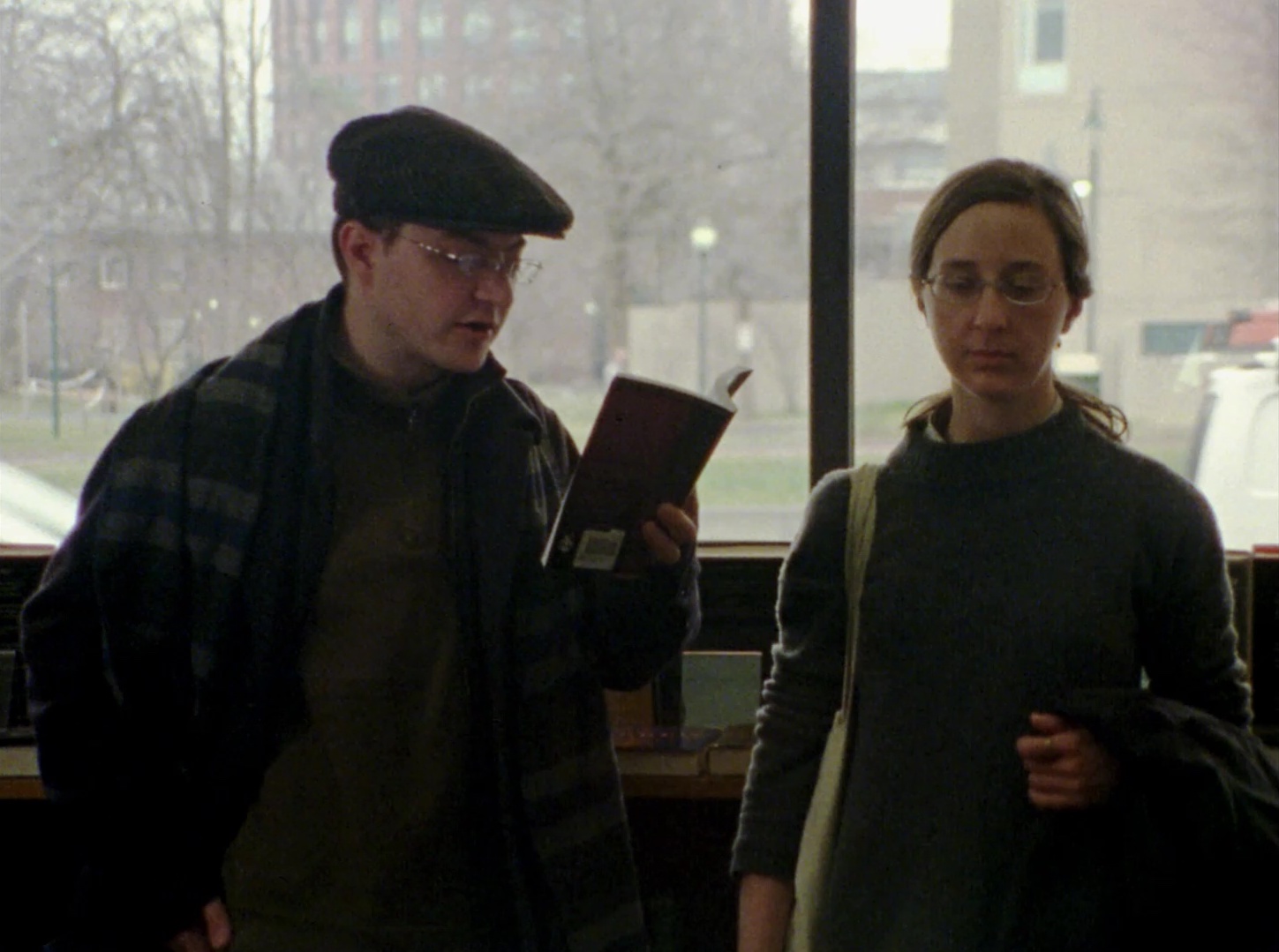
TWY: I would like to go back the endings later, which are quite particular, as some of our audience members also noted. At first glimpse, the film seemed to end abruptly, although after a few viewings, it became much more apparent. But one thing that relates to this is your approach to humor, where Cal always seems to have a punchline of-sort to end all of his long monologues, mostly a nice piece of knowledge or whatnot to surprise people at the end of a long talk, which usually ends in silence. Where did you found that dynamic?
TF: That’s Cal. I really like that part of his personality and I tried to capture it. I cast him knowing I was going to exclude certain parts of his personality, but emphasize or magnify other aspects. That’s part of him. My everyday life is full of awkward humor in my interactions with people, which is something I like to include in my movies.
TWY: Reminds me a bit of filmmakers like Luc Moullet or Louis Skorecki with this awkward, subtle humor. You translated some of Moullet’s criticism, too. What’s your thought on comedy in general, as a form? With Classical Period, I feel like if you divide the phrase ‘divine’ and ‘comedy’, you’d kind of get the two sides of the film.
TF: Yeah, I’m a fan of comedy. When I was in college, I was really into early silent film comedy a lot. A highlight of my filmgoing life was the all-35mm Laurel and Hardy retrospective at the Cinémathèque française in 2010. Unfortunately, something which would never happen nowadays, certainly not in France. This influence is probably more apparent in the more overt humor in my short films from ten years ago. Nowadays, maybe that stuff mostly survives in awkward interactions between people in the film. But I’m working on a film now, which has a character who’s more blatantly a source of humor. Although the other half of the movie is kind of dark. I really like is when a film can very deftly mix comedy with drama, like in John Ford, where you have both next to each other, even in one scene, and the film isn’t just one tone.
TWY: Yeah, the tonal changes are something I liked. Regarding Classical Period, one of the audience members also mentioned Frederick Wiseman, and I guess the reason for that would be the changes of pace between those long sequences, where you film people do an extended piece of action, like doing monologues, and the shorter, more silent interludes in-between. So there’s that combination. Although in Short Stay, quite literally, almost every scene is short. I read somewhere that with Classical Period, you are responding to that earlier style by trying to do a more talkative film.
TF: Yeah, I had made four films with one cast of people and one kind of through-line, and felt like doing something a little bit different, stretching my wings a bit, while still filming in the Philadelphia area. Cal was in Short Stay, but it was a departure in a different direction. I always feel that every time I finish a film, I look at it and think I wish I had done that differently or it would be interesting to do that but slightly different… It even happens when I am shooting a film, because I usually shoot with pauses. During the pauses, I’ll look at what I shot and that will affect how I shoot the next scenes.
TWY: In Classical Period, you addressed the seasons, and with Short Stay and Outside Noise the changing cities. Do you film in sequence?
TF: I’d like to, but they weren’t shot really in sequence. We shot one season all at once, but within that season, scheduling around people’s jobs and lives meant shooting out of sequence. I’m making a movie now, which I am shooting over the course of an entire year—it should be done in a month—and I am shooting it in sequence: May, July, September, etc., and that’s how it will be in the film.
TWY: Yeah, I asked this because I am also interested in how you work with 16mm film, more particularly with natural light sources. You also worked with the same cinematographer for all these films, including the film you are doing now?
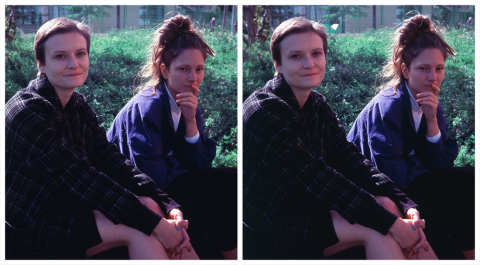
TF: The film I’m working on now has a different cinematographer. All the other films were shot with Sage Einarsen, a Japanese-American cinematographer who I met in New York. He’s also a great analogue 3D photographer and he is assisted by Britni West, also a great American filmmaker and photographer. For the new film, it wasn’t practical to bring them over every month for a year. Instead, I am working with Jenny Lou Ziegel, who is based in Berlin and I have known her for about ten years. She also shot a portion of Outside Noise. My collaboration with her is similar but different to my collaboration with Sage, just because they are different people.
by Sage Einarsen
TWY: I’ve always been struck by the quality of light in your films, although we projected this time digitally, but I’d love to see a print one day. In Outside Noise, I found the depiction of insomnia really potent, especially how the characters react to daylight, since after a sleepless night, the daylight feels more aggressive when one steps outside.
TF: Yeah, over time, we worked with less and less lights on set. Initially, because it’s cheap, we lit all the movies with China balls or construction lights from a hardware store, which we returned after the shoot. On Short Stay, I got tired of how that soft light looks and also tired of carrying around so many loose light bulbs – there was a very dangerous plastic bag full of loose bulbs which fortunately never shattered. We lit less and less over the course of that film. For Classical Period, I wanted more hard lighting. We didn’t have a lot of lights, just two or three for the interiors. For Outside Noise, I decided only to shoot with daylight or available light. In the end it is 98% just sunlight or available street lamps. You have to choose locations where you know the light is okay and then choose the right time of day. Since we had a small crew, we could be flexible and we always got lucky with the weather.
TWY: Yeah, that’s a big factor.
TF: In Outside Noise, I was fortunate to have a friend’s apartment on the top floor with a window in the ceiling. We shot in it for three days and it was always sunny. Sometimes a cloud went by. I really liked this film by Marguerite Duras from the early 80s, which use a lot of window light and people shot against windows. Agatha et les lectures illimitées, for instance.
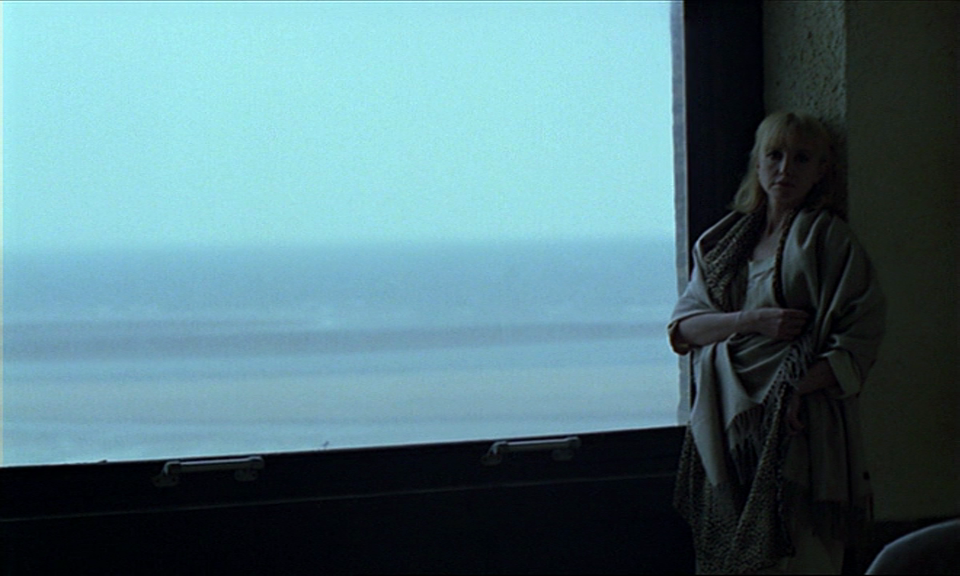
TWY: With Bulle Ogier.
TF: Yeah, they are in a hotel, not much is happening, but a lot of nice light and shots of a seaside town in winter.
TWY: You also work with direct sound. I assume most of your films are recorded that way?
TF: Yes, probably 99% of the film is location sound. Occasionally, if there’s a technical issue, I might cut some dialogue from a different take, but there’s really no foley or sound effects. The sound is mixed and EQ’d to smooth things out, sometimes we use noise reduction if the exterior was uncontrollably loud. The goal is to make the dialogue as clear as possible. But it’s pretty basic. I love the sound of films from the early 30s and documentaries, especially in the 60s or 70s, where there was less done to the sound. There was less that they could do to it.
This kind of sound gives you an immediacy, and it gives shots a kind of weight, I think. It creates a kind of intensified experience of what was in front of the camera. It’s the same, at least for me, when you watch an early film, and feel this wonder of people moving on a screen, captured in moments of time and space. Film is the most significant artistic invention of the late 19th century, being able to watch discrete moments of time. It is surprising how much of post-production these days is about erasing these qualities.
TWY: I agree. Naturally, I love many filmmakers who compose sound separately to the picture, but the direct sound from a Straub-Huillet or a Rivette are so intense. So, this is a long brewing question in my head: in the early 1930s, most films would use direct sound similarly, since the technology for post-production hadn’t existed?
TF: Yeah, pretty much. I think, in the early 30s, there was a thought that the sound persons was probably, to some extent, more important than the camera person on set, because they had to get good location sound, and they couldn’t do a lot to it afterwards. It’s like what Jean Renoir says, that primitive art tends to be more beautiful than art that is technically perfect.
TWY: Would do say the same about using 16mm film in terms of primitivity?
TF: It’s tricky. I think 16mm, and film in general, are technology which are or were at a kind of pinnacle. when the transition to digital filmmaking and projection arrived. I use 16mm because I want to shoot on film and it’s more practical and less expensive to use than 35mm. I think it is an advanced technology, but I do try to use it in a very simple manner. Compared to digital, one of the things that I like about making a film print is that you can’t do much to the image—you can make it darker or lighter, warmer or cooler, but you can’t manipulate everything like with digital, where each pixel can be altered. I’ve seen so many films shot digitally where they didn’t take enough precaution in the color grading and everything ends up looking like an animated movie. People look all plastic-y. Film does have this primitive side to it in comparison to digital.
TWY: I’m interested in your formation as a filmmaker. You work also as a translator, a projectionist, one may also say a scholar or an editor. What do you see in all these different practices?
TF: It depends who’s asking! I have to pay my rent and I need to eat. On top of that, I have also paid for most of my films. I translate and I project movies in order to earn that money. I was projecting regularly in a cinema in Berlin until December, but they are closed this year for renovations. I have a projection gig at an experimental film festival in a month and in September again at another experimental film festival in Frankfurt, both with lots of 16mm.
I wanted to become a projectionist because when I was 18, I had seen a film by another New York City projectionist named Ronnie Bronstein. He had made a movie over six years (Frownland) paid for by projection work. I doubt he would have advised me to follow a similar path. But I also thought, I’m interested in making films and projecting them seems related. I had an opportunity to learn one summer that I spent in Baltimore. I just talked my way into the booth and the guy taught me to thread 35mm.
My translation work is fortunately mostly film related. I would maybe differentiate between my interests as a reader and a viewer and my interests as a filmmaker. The kind of stuff I want to make for my films is not always the same as what I enjoy watching. I can enjoy watching a film that’s quite different from what I would make. Not always, though.
TWY: It’s interesting that you mentioned Bronstein, because I am wondering if there is some sort of friendly relations with other New York-based filmmakers, for example, the producer of Classical Period, Graham Swon; also filmmakers like Dan Sallitt, Ricky D’Ambrose, the LA-based collective Omnes Films, etc. Do you feel like belonging to a particular group of American filmmakers, who make films in a different way?
TF: Not so much for me. With maybe the exception of Dan Sallitt, who I admire for making films so radically his own and so outside the system for so long. I see a difference though: I aimed at and continue to aim to cast non-professional actors, especially ones who are outside of any existing film scene. It is a political decision, to put new faces on screen. There is a tendency or trend among American filmmakers to cast many of the same faces from a small scene. And I have a complete aversion to that. I don’t get it.
TWY: Although in your film there is your own group of cast, which I enjoyed seeing from film to film. In Berlin and Vienna, you have also other actors that viewers get to know with. When I see one of your films, I get the energy of the people that you’re filming and in a way that keeps me in the film, in the sense that maybe dramatically not much happens, but it’s curious to see how these characters move around in different situations. This relates to what I am thinking about endings, that in Outside Noise, you introduced a new person in the film’s last scene. As we meet this new person, the film takes on her voice and her pattern of speech. And then, again, the film ends, and you were left with that energy. So you are right, even as the film ends, one is still constantly meeting other people.
TF: I like when movies don’t give a lot of orientation to the viewer. I like when a film feels that it just starts, like maybe there’s a missing reel or something, and then it ends in a similar way, like it could go on but this is all the footage you found. And I kind of think Outside Noise almost has two separate endings. There’s the one ending where Mia leaves for Berlin again and then Daniela is left alone. And the movie could end there with her walking a way through the market. But then there’s the second ending after she’s been showing the city to her visitors, she meets this friend who lives in Vienna and who wants to show her something that she didn’t know about. There is some hope there.
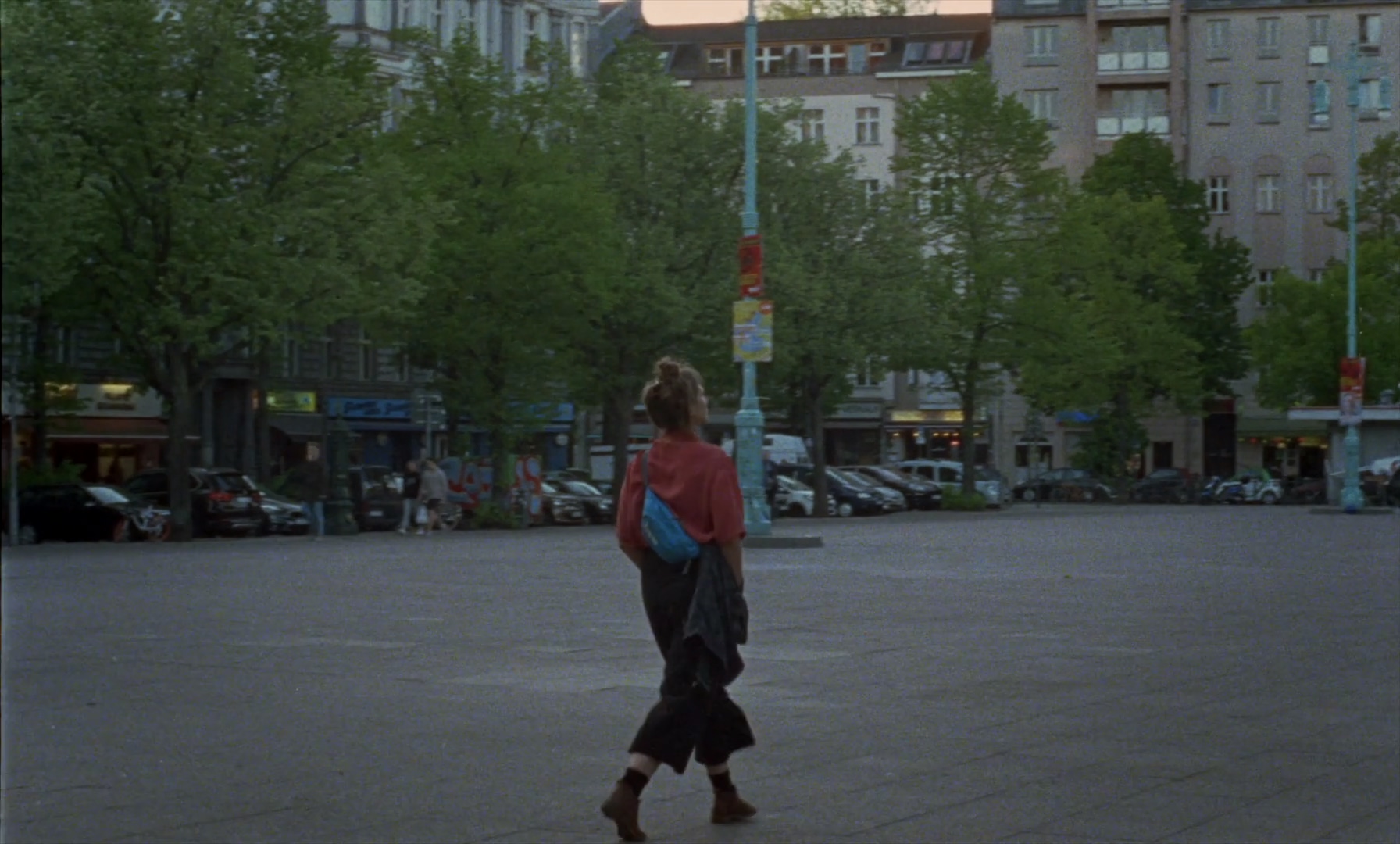
TWY: I think so. It’s again the quality of light of that scene, with the greenness. I like that these films all ends with this tiny contemplative moment of the characters: Cal after he said this one thing, or here with Daniela listening to her friend. I like that how the film leave a few seconds before and after the action. And going back to the actors, I also wondered if there’s a change to your method now that you are making films in German rather than English.
TF: I’m trying to apply as far as possible the same method here as I did there. Working with a small crew and saving up money and shooting when I can and doing it in small steps.
Right now I’m working something where I write the scenes in a first draft, then I give it to one of the actresses and she corrects it and puts it into her words. And that isn’t necessarily so different than Classical Period where I would write it and then I would let them, if they wanted to change the phrasing a little bit, do that. In Outside Noise, we would generally were discuss the scenes beforehand and come up with a list of the topics to hit in the dialogue. We would rehearse it on set and then shoot. And that effected, of course, how I could decide on the shots. So in Classical Period or the film I am doing now where there’s more of a script, I could decide before being on set what the shots would be. That’s probably why Outside Noise has fewer shots in each scene.
TWY: I’m interested also in your translation works. For example, this very interesting project—I guess it’s not just translation but also regarding film history and history in general—, which is your piece on Godard’s Adieu au langage (2014). The long piece on MUBI where you locate all of his references. How did that came from?
TF: In 2014, there was a Godard retrospective in New York. I was asked to make subtitles for about twenty-five of the films, mostly one shot on video, which had never been shown in the US before and had never been subtitled. Doing the work, I became very familiar with quotes which Godard repeatedly used and their sources. When I saw Goodbye to Language, I could recognize a lot of stuff and get a lot of references. After talking a lot about the film with a few of my friends in New York, I decided to put it down on paper and share that.
TWY: Yeah, and because I always want to do something similar, but I have no idea how to do it, that is to compile the literary quotes from Nouvelle Vague (1990), which are often mutilated by Godard. I wonder if there’s like an archive where he store all that kind of stuff.
TF: I don’t think Godard archived that stuff. I think he was just a big reader and someone who quoted a lot, misquoted a lot and returned to the same quotes, authors, texts again and again.
TWY: I feel like quoting has became sort of his language by his late period.
TF: Yeah. Early on too, actually. Even in A bout du soufflé (1960) there’s a lot of collaged quotation going on. And in criticism, there are also made up quotes and made up interviews.
TWY: Can you talk about your first encounter with Straub-Huillet? I feel like there is a renaissance of interest in their work, after most of their films have been restored, at least among a small circle of cinephiles. Where and when did you found them?
TF: I had read about those films when I was still living in suburban New Jersey as a teenager. I read a lot about film in the high school library and online. This was when people still had blogs. I had a very naive sense of who were known and who were unknown filmmakers. I would read all kinds of international filmmakers and naively assumed they were commonly known names. So I had read of their work and was curious. I had a lot of chances to see their films between New York, Paris and London in 2008-2010. First, there was a screening on 16mm of Too Early, Too Late (1981) at Light Industry, a micro-cinema in Brooklyn, which was introduced by Pedro Costa. I remember really not getting the film. And then there was a series for Manny Farber, after he died. I saw the Straub-Huillet films from 60s there. I still felt like it went past me too fast and I didn’t get it. Then there was an “opera on film” series where Moses and Aaron (1975) was shown. And I remember that screening really did something for me. I came out of it and saw colors differently as I walked through the city.
I really was affected by those films in an aesthetic sense and a political sense. I liked how they worked with small budgets and small crews, while also making these really radical films. For me that was way more interesting than the romantic comedies by the Mumblecore filmmakers. That is the kind of the thing that affected me a lot when I was 18, 19, 20: seeing films that seemed doable. Like Killer of Sheep (1978) and Wanda (1970). Those also had a really big impact on me. Straub-Huillet’s films were seemed like films that anyone could make. Almost too simple. They were so simple, the first ones that I saw, that I didn’t know what to make of them. But I was really affected by them.
TWY: I agree. And I think although there are great sense of freedom or directness, one of the things that you could see in their films as well as yours is a strong sense of self-discipline. Straub-Huillet films may seem very simple, but the filmmaking process was quite intense and complex: locations, sound, actors, logistics, etc. The performances are so fine-tuned.
TF: I like all those elements about their films. I also like the way that they, on the one hand, reject psychological performances, but on the other hand they are interested in how one can express psychology formally, through editing choices or where the camera is placed in relation to the actors.. I like filmmakers who are interested in the form, what the form can express emotionally, not just what an actor can project.
TWY: That relates to the other translation you did, which was Nicole Brenez’s book On the Figure in General and the Body in Particular.
TF: That is kind of related to what I just said in terms of form, looking really closely at form. What form can express. I remember going to the library and looking at it at that book in 2007 or 2008. The original version is a really beautiful book with a lot of color frames. Over the years, it was something that I struggled with a lot. Sometimes I felt like I would read a passage and it would make total sense, and then other times I wouldn’t understand at all what Brenez was saying. This is probably a sign of strong thoughts. The book accompanied me over many, many years.
During the pandemic I got a PDF online and started reading it and watching the films she discusses. As a way to better understand some of the chapters, I started translating them just for myself. At a certain point I had done a number, and I don’t know why I had the idea to try to find a publisher and go through all that work, but at some point I had the crazy idea of committing myself to doing it. I wish I could have translated the whole book and I wish we could have put out a version that was as luxurious as the original. But it’s very difficult to publish books these days.
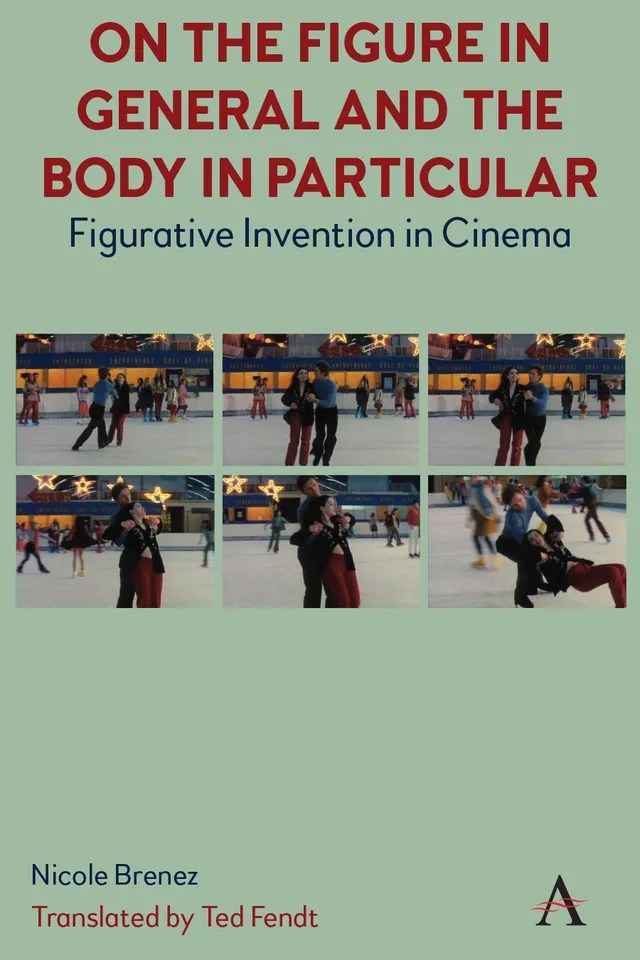
TWY: That’s interesting. It’s one of the most interesting book on films I have read recently. I haven’t read the whole thing yet because I also struggle with certain chapters, and there are other chapters that spoke to me a lot, for example, the one about Monte Hellman, where she writes about his films in relation to Bresson, Garrel and Eustache. Can you say talk a bit more about her approach as a theorist, since so much of her writings are untranslated in English?
TF: Sure. I think that she’s someone who tries to approach the film image by image, shot by shot, sound by sound, and see what the film says. It is in a way a kind of post-auteurist vision. I think she is trying to go really deep into what plastically is in the shot, ignoring to a certain degree authorial intent, and seeing just what is expressed formally/visually/plastically. It was when I read one of the books she references, A Theory of /Cloud/, a book of art theory, when I began to have a clearer sense of how to translate the book and the degree to which she is influenced by writing on the visual arts.
TWY: Yeah, the one article I keep going back to is actually the preface, the letter Brenez wrote to Tag Gallagher. Every time, I went through this fog of concepts, but maybe I’d see some films and go back to read it, how see it changes my perception of them. Your translation is not the whole book, are there other pieces not included in the translation that you think are worth a mention?
TF: One that I really regret not having translated is on Pancho Villa, the Howard Hawks film. I think also because she mentions the film in the introduction. There were also a couple of things that were already translated, which are around the internet.
TWY: That’s wonderful. Can you share with us a little bit about the new film you are working on?
TF: It’s another film about a book group and it involves Italian literature again, but this time more contemporary. It considers how literature can bring up feelings you’re trying to repress but also be source of strength. And it’s about finding where you should be in the world. But it is hard to speak of an unfinished film.
TWY: Your description of the film reminds me this famous debate between Jean Eustache and Jacques Rivette, on whether one should express their personal life through fiction in cinema. Rivette believed that one should definitely not express their own life, while Eustache had the opposite idea, but he did so through performances and remakes. Do you make that distinction yourself? Because you’re talking about this experience working with literature and cinema, and I have a feeling that you do all this stuff for cinema, whether by translation or making films, your expression seemed not autobiographical.
TF: Well, without mentioning film in this current project, I would say it is actually very autobiographical. I’m including a lot of stuff about myself in the dialogue. I realized that in the previous films, although they were not overtly autobiographical per se, I was choosing stuff from other people’s lives that I was attracted to it because I related to it. So in the end the films are also about me, indirectly.
TWY: Before we wrap up, I just want to ask is there anything that you’re watching recently or reading that you enjoyed. Are there any new or old filmmakers that you’re interested in?
TF: I saw a really great pre-code film called Three Wise Girls (William Beaudine, 1932). Really great film. Very political, actually. It deals with the state of women in early 1930s America. It is very blunt. I have decided this year to list what I’ve watched. I haven’t done that the past few years. I saw a nice print of The Lady of Shanghai. Excellent. And another great American film, The Glass Wall, which was made in late 1940s New York. Great location shooting in black and white. And I watched L’Homme sans visage, the Georges Franju TV series from the late 70s, made on a shoestring budget. Really interesting. Otherwise I am reading Henry James chronologically at the moment.


为 twy 发表评论 取消回复