
Interview conducted by TWY (in English) and Wang Mila (in Spanish) for TheDissidents, in collaboration with Gu Shutong, Sharon “Xialuo”, Shi Xinyu, Liu Weijian, D-Will, Luoman. Thanks to Fluorescent and Shi Xinyu for connecting us with director Citarella. Spanish parts translated by Wang Mila. Conducted on January 28th, 2025, the eve of Chinese New Year. Read the Chinese translation on TheDissidents.
****
TheDissidents (DIS): Let’s begin by talking about your latest work, El Affaire Miu Miu (2024), which was shot rather quickly, and under different circumstances from other works of El Pampero Cine.
Laura Citarella (LC): The short film is something atypical for us. Usually, we make films or develop projects from El Pampero Cine in that we are the owners. We discover how to pay for those projects. Miu Miu came in a different way, because we were kind of hired to do that film. It’s something very different from things we’ve been doing for years and it started with this project that Miu Miu has with different female directors. They’ve been making this for many years, and last year they chose me as one of the directors, they appeared and asked me to do something.
DIS: What did that collaboration entail?
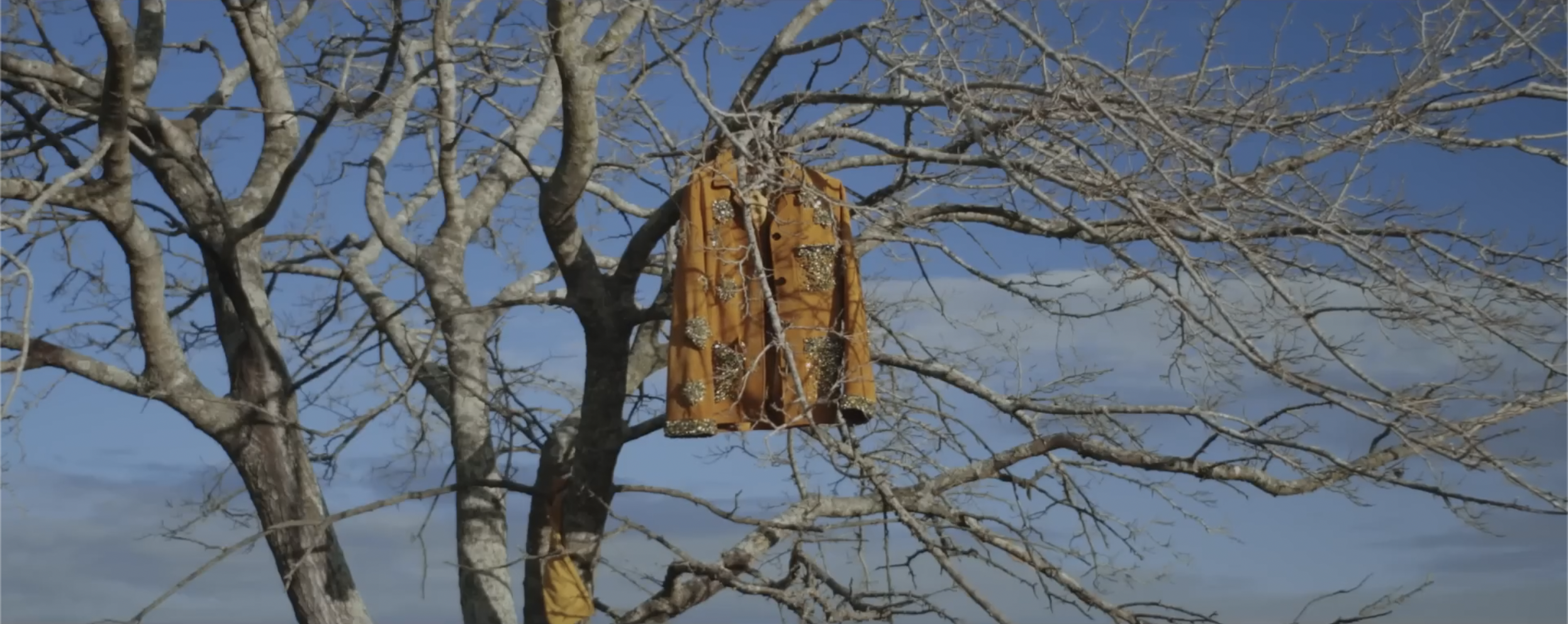
LC: I just had to include one of the seasons of the costumes of Miu Miu, it was winter. That was the only obligation I had. Then I could be as free as I wanted and I had to invent something to do. So as I had made Trenque Lauquen (the film) before I decided it was a good idea to cross these two worlds and to bring this new thing that was a world of fashion, which was something I was not so familiar with, and to bring it to Trenque Lauquen (the city), and to melt these two different worlds and do something with that. So the production and the idea of the short is something that comes from us, but it’s in a different way from previous our works. It was not something that came from us but from the outside world.
DIS: You said it was a commission work, and we understand that many El Pampero films, not just yours, but films by Alejo Moguillansky or Mariano Llinás, also came from commissions. But as the filming goes on, the film would change from being purely commissional into something of your own. Mariano‘s latest, The Mondongo Triptych (2024), sort of took that to the extreme. I think that’s a through line in your career as a filmmaker and also that of El Pampero. You have maintained your vision while showing us the original context of the work.
LC: Yes, it’s true. Many of our films came from somebody hiring us, asking us to do something. Suddenly we were shooting: for example, with Alejo, there’s a film called El loro y el cisne (2013) or La vendedora de fósforos (2017), those two films started as documentaries about something that we were involved, and the films were not originated by us. But a film developed from its starting point, then fiction appears in this documentary world and suddenly, a film that started as a 15-minute documentary ended up becoming a two-hour feature. This is a very typical procedure for us and it depends on who is hired to make that film. In the case of Miu Miu, it was me. It was a clearer work because we had to work for a brand that is different from making a documentary about something.
Usually, when something appears, what we do is…… I don’t know, Alejo, for example, would come and tell me, “I discovered that with this film, we could do this, we could do that,” so we started thinking how we could make that small piece into a film. And in this regard we try to accommodate the structure of El Pampero that is very small to that film, that it started perhaps as something very little and without ambition, but ended up being a film with actors and other ambitions.
DIS: For the Miu Miu short, you have elements from Trenque Lauquen, including locations and characters, in sort of a remix. Meanwhile, you got the clothings and the models from this Italian luxury brand, forming also a part of the film’s mystery. In Trenque Lauquen, the mystery came from details regarding the histories of the characters, but with Miu Miu, the clothings are such alienating creatures, coming out of nowhere, as they are also merchandises. How was the idea of incorporating this, say a product or a brand into true mysteries?
LC: It was strange working with the brand, because, as I said, I had to bring this world that is a very unknown world for me. It is not a day to day. We don’t even have Miu Miu shops in Argentina. We don’t have these because we are a very poor country. We don’t have Prada. We don’t have Gucci. We don’t have that kind of brands. So these are something I see in other parts of the world, I see them on Instagram, or I see them when I go to Europe or to China, etc. But for me, it was important not to be making advertisements, not to be making a film to say how good the clothes of Miu Miu are. It had to do more with the fact that that costumes have a potential of being fiction, of being evidence for the characters, as the strong thing for El Pampero Cine is this kind of language, this kind of investigation surrounding fiction, working with fiction. This is the most important thing of our films, kind of an obsession that we have.
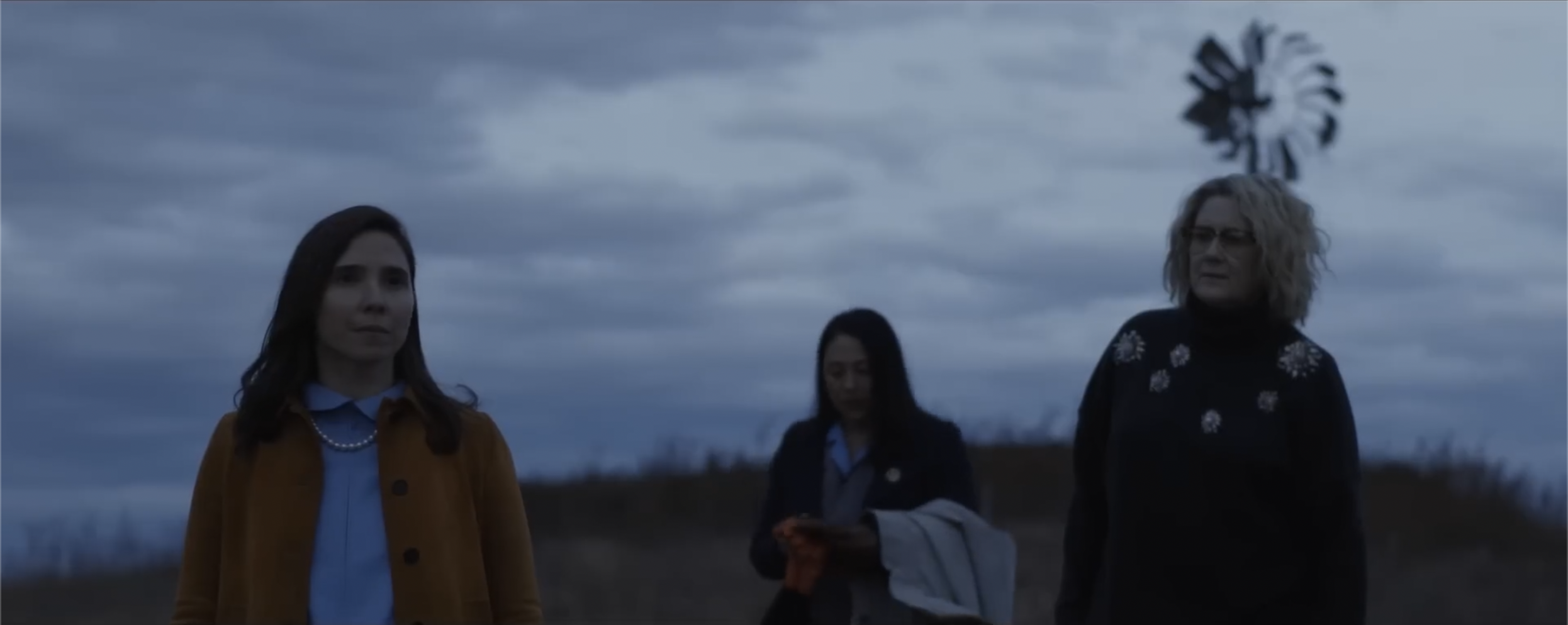
I thought it was a good idea not to change the universe of Trenque Lauquen as it was going to be modified by the arrival of these strange world, this almost surreal world that is the world of clothes. And the mix between Trenque Lauquen and this territory, with these kind of characters and the rhythm of these characters, and the melting of this with the world of fashion, created a very strange image of this universe. For me, this was important. Also, I wanted to try things again with the same people, although there are not the same characters, only the actors are the same. The only character that is the same is the character of “Chicho”, who is Ezequiel [Pierri], – my husband – the same guy from Trenque Lauquen and also here. He is the only character that still remains the same. But for me, it was nice to work like in a small theater company where you can change roles. For example, Laura Paredes was the main actress in Trenque Lauquen and here she is part of a group of triggers. So changing the positions of characters and actors in the film. It was a way of experimenting with something that I already knew, but you change one piece and suddenly everything is different. So it’s a way of trying to create or expand language and ideas.
DIS: What’s wonderful about your films is that the subject of an investigation often becomes an investigator herself. The mystery is always handed to someone else. We would also like to hear more about El Pampero’s method of production, and how your perspective is situated within Argentine cinema. And since we are faraway, we want to first talk about distribution. Some of El Pampero’s films, like La Flor and Trenque Lauquen, have been seen and adored worldwide. El Affaire Miu Miu had its world premiere in Venice but also online via YouTube. But there are many films that were almost only distributed in Argentina. For example, Popular Tradición de esta Tierra (2024), Mariano’s other recent film, which had sparked debates locally, had only played in Buenos Aires. Do you see that some El Pampero films as having more global appeal versus others that are more of a domestic or regional interest? How does El Pampero handle distribution in this context?
LC: Yes. One of the most important things that we discovered as a production company is that not all the films are the same and not all the films are going to fit in the same formula. Although we don’t consider ourselves as a production company – we always say that we are a group of friends, filmmakers. Of course, in the end we have like a legal structure, but we are friends and we meet, but instead of hanging out, we work, but we are very close friends and we spend a lot of time together and we usually don’t feel that we are a company. But the important thing is that not all the films are the same. Even we were surprised with Trenque Lauquen and with the response of the world to that film, even though it was a film made in a very independent way and we didn’t have like a marketing strategy and we didn’t have support from someone like Amazon, Netflix or other platforms. We did it ourselves, then distributors appear and sales agents and that kind of things, but I mean, we self-manage. So I think that the most important aspect of this is that we understand that maybe a small film needs more time and more support than a big film and when we say “big,” I’m referring mostly to the fact that we understand how films like La Flor or Trenque Lauquen are going to work in the world because they are more universal, even though they have their own identities and everything, but these are more accessible films and there are going to be more responses from the audiences and all the chain of people working on distribution, exhibition, etc.
And then, we have films that we understand that maybe we have to take care of them in another way, in a more precious way. For example, this film that Mariano did, we feel that it’s a great film, but we are not sure that it’s going to work very well outside from Argentina. It’s a very specific film about a very local thing – “not universal” at all, although this is not something I agree with. On the other hand, we have many, many small films. For example, I made a film about an Argentine poet that died, a film that is called Las Poetas visitan a Juana Bignozzi (2019, co-directed by Mercedes Halfon), and it was not so easy for me to show that film. It’s a very important film for me that is related with Trenque Lauquen – a very close film, but I understand that maybe because of the language, the translation, because it’s about a poet, it’s not so easy to show it to the world. The important thing is not trying to bring this film to the same path or process [of distribution] as Trenque Lauquen, because it’s not going to work. You have to find the space and the best place for this film to be shown.
I believe that the world should be prepared to receive more of these things, but I think festivals are not working this way. They prefer more ambitious things. Festivals are expecting you to make films about many things, like Trenque Lauquen, which is a fiction film and you have different genres, different storylines, many actors and locations and it’s something that expands. it works with the world, but also with the literature and also with the history of cinema. It’s a film that has had a lot of conversations with literature, cinema, life, so it’s easier to show it to the world.
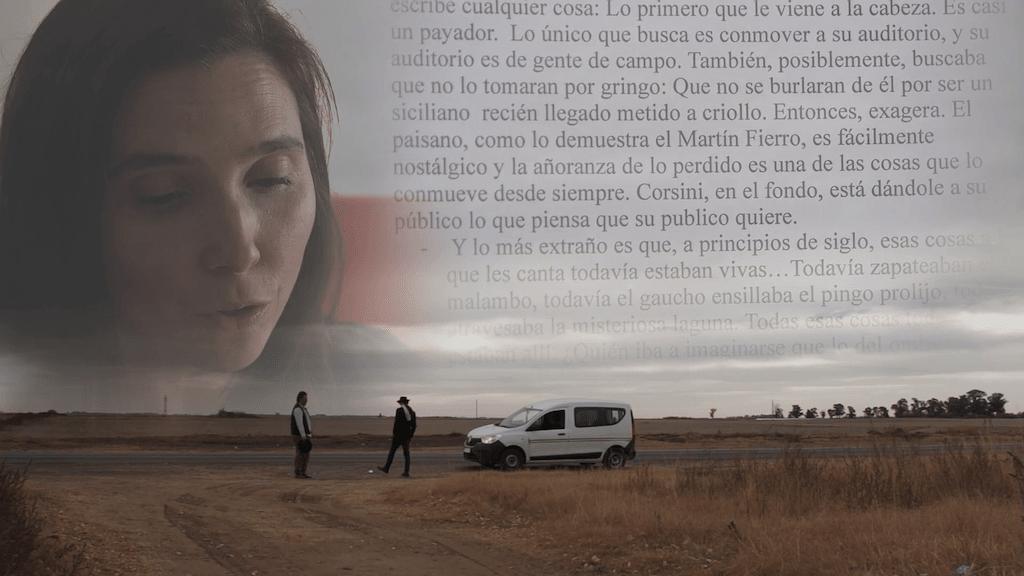
DIS: We saw Las Poetas visitan a Juana Bignozzi after discovering Trenque Lauquen, and we realized how important that film was in relation to the latter film’s narrative. These details are the interesting thing about El Pampero, since the films always have specific settings and points of view, therefore also a continuum, as if one film directly links to the next, and they exist also within time and different eras of your nation. So now that Argentina has entered a new phase politically, a difficult period in terms of art and economics, how are these challenges affecting you?
LC: We have many tools to make films, because we’ve been making films in many ways during the last 25 years. So for El Pampero Cine, it is very natural to be in an economical crisis or having financial problems, or inventing films from nothing. This is something that we are very used to do, and in this sense it didn’t change. But what has changed a lot is the context, when you see that everybody is having financial or other problems, that everything is very expensive. It’s not only that the new government is a right-wing government, that they stopped giving support to cinema and to arts in general, but also that it’s impossible to pay for things in Argentina nowadays. It is more expensive to live in Buenos Aires than living in New York. So it became very, very difficult to survive, because you never get it on time. The economical crisis, it’s beyond art. Surviving in Argentina became difficult. It’s not only that they stopped giving support to many friends, to many producers, and the industry is in this very moment in a big crisis, and it’s sad because most of our friends, they are not working, they’re not managing things as they can, and things became really difficult in Argentina.
Apart from this, there is a gesture from the Milei government and all the followers of that government that they started being very aggressive with the artists, as if, in a way, we shouldn’t exist. They have these kind of speeches, and it’s very difficult to survive in a context where you have to even explain to your own parents what is your job and that you are not a lazy girl and you work. I mean, they started building a narrative like we are devils. So it’s hard to have a healthy atmosphere to live in a country where the violence on speeches became so natural. And of course, the people that wants to make films, we are all fighting for continue making films and not letting these procedures that are completely designed by these evil people. We are finding ways all the time of cheating the system and trying to continue making our film. But it became difficult.
DIS: Regarding El Pampero’s relation with Argentine cinema in general, we are interested in the role and bureaucracy of INCAA (Instituto Nacional de Cine y Artes Audiovisuales), a key player in Argentine cinema since the 1990s. What’s behind the resistance with INCAA’s policies, and were there any major changes in INCAA’s policies in recent times, positive or negative?
LC: Well, in reality we’ve never worked with INCAA, initially it had to do with the fact that it cost us a lot in having that bureaucratic structure applied to make a film, that idea seemed a bit absurd to us. Let’s say that afterwards, we started a very long conversation with the rest of the industry in Argentina and with INCAA, although INCAA never opened the doors to have these conversations. I think we were questioning or asking for more diversity in the ways of production, that INCAA include other forms of production and not only the industrial structures. In that discussion with them, which was not a discussion because they never opened their doors to dialogue, we began to create our own ways of producing, which are ways that try to get out of those pyramidal, vertical structures of patronal work with the bosses. And we began to create more collective and horizontal structures.
The problem is that INCAA never had a “B side” of producing films that was something maybe necessary in a country like ours, because our country has been in an economical crisis for many years. So sometimes you have to also invent other ways of producing and not only producing like in a standard way, but the big problem is that they think that all the films fit in the same formula, in the same structure of producing. What I mean is that you need the same amount of people for making the films, you need the film to have a duration, which is the same for all the films, you need a script that is like a dramatic structure that should be the same for every film. Or, for example, for shooting, they usually push you to make a film in six weeks. And suddenly you say, like in Trenque Lauquen, we included the passing of time: I got pregnant during the process, so I appeared pregnant in the film; my daughter was born, so she appeared in the film. This is not something that you can explain to an institution like INCAA. This is something that is not on their plans. So when we started in a way fighting or discussing with INCAA many years ago, we tried to let them understand this other, this possibility of the diversity on working. But they didn’t, they were not interested in having this conversation with us.
However, Milei appeared and all the right-wing parties started going against INCAA, so we decided not to discuss [in such context] anymore, because INCAA now has a very big risk of disappearing, from a moment to another. We decided that now is not the moment to continue this discussion. We have to support INCAA and try to discuss what is being discussed now, which is that INCAA should not exist. And we feel that the INCAA should exist because of many reasons that you understand. So this is the conversation nowadays.
DIS: You have been showing films constantly at the MALBA (Museo de Arte Latinoamericano de Buenos Aires). Does El Pampero collaborate with other local organizations to distribute films?
LC: We are our own producers and also our own distributors. The only exception is the film Trenque Lauquen, where we decided to work with a very trusted international saleswoman, Luxbox. I am usually the one who makes those deals with distributors or exhibitors, but in this case, since I am also the director, it was not so easy for me to cover all the roles together. Our agreements with the cinemas are also managed within the group. In this way, we have discovered spaces, distributors (around the world) and agents who have helped us. We have discovered a large network of people who can understand, for example, that we want to release our films in more radical, more concrete schemes. For example, we never release films with more than two or three weekly sessions. That way, the time it takes a film like ours to form a ‘rumor’ or ‘word of mouth’, what we call ‘boca en boca‘, is greater, and movies in this way have longer lives. It’s the same with international distribution, with festivals. It is we ourselves who manage things, who maintain conversations. In this way, the films – instead of being thrown around the world – are accompanied in each of their steps, at least in the beginning.
DIS: Over the years, El Pampero has accumulated a large number of young collaborators over the years, like Ingrid Pokropek, who has directed her first film Los tonos mayores (2023). How does El Pampero support young directors? What other collaborators’ new works can we look forward to?
LC: The film by Ingrid Pokropek is not a film by El Pampero Cine. Ingrid is a friend and she’s been working with us for ten years, and she decided to make her own life, which is beautiful for us always. But it’s not that we participated on this film. We only participate of the films that we ourselves do, the four of us: Mariano, Agustin [Mendilaharzu], Alejo and Laura. We are four people and the only things that we produce from El Pampero Cine are the things that we invent, that we decided to do. It is not that we receive projects and we develop and we work on other people’s projects. We have enough with our own things. But yes, it’s important for us to support these kind of things and these directors that they learned a lot working with us. So we try to be close to them and to support, and if they need help, to help. But it’s something that we don’t usually do. We receive a lot of emails like saying, “I have a film, I would like you to read the script…” No, as a saying goes, we “open doors from within. From the door inside, from within us, between us.” (“puertas para dentro. De la puerta para dentro, para dentro nuestro, entre nosotros.“)
DIS: How are El Pampero’s films seen among the film culture of Argentina or in Buenos Aires? How do the critics in Argentina or the cultural atmosphere in Argentina speak about your works?
LC: I don’t know. [Laughs] I mean, we had a lot of visibility during the last years because of Trenque Lauquen, then we participated of many things, discussions and things regarding producing. I think we started having a more important space, but I don’t know what is the feeling that the people surrounding us has. I think, yes, that everybody finally understood that we work in a very independent way and that we wanted to and we stayed in this independency. You know, it is not that we are making independent films because we want to then arrive to another structure. We keep being independent and we’ve been like this for 25 years. So I think that finally it could give like an image or a sensation that this is something really true, that we are working in a very serious way. Before it could sound childish, but now I think that everybody understood that this is the way that we decided to be in cinema in Argentina, and the idea is to keep going like this.
Of course, we want to make films, bigger films, because we are older and we have more necessities: we have less time, we have kids and we have more complex lives. So, of course, we want to make maybe different films from the one we used to make when we were twenty or thirty. But then, even with Miu Miu, we had a budget, and we had a very concrete proposal regarding budget. We wanted to keep this spirit of making films the same way as we’ve been doing them for the last 25 years.
DIS: As a producer of almost all El Pampero films, how do you navigate through all of these work? Is there a method for you?
LC: No, I don’t have a method, but I can say that when I’m the director, it’s very clear for me that producing is part of directing, and directing is part of producing: I’m working with ideas; I already know the places where I’m going to shoot; I know already the people that I’m going to work with. So when I’m writing a script, in a way, I’m also producing it, because I have this double heads of these possibilities.
I think all of the films of El Pampero Cine are like that. Mariano also has a very close relationship with producing and this obsession of inventing systems and ways of producing. Alejo also, we are involved in production and directing all the time. So this is something that happens with films directed by me and films directed by my partners. The difference with me is that I’m officially the producer and the person in charge of moving a film, of making it possible, of getting the money. It’s something that I do, you know, it’s like breathing. It’s something that is in my life and it’s in my day to day, and in my holidays. It’s something that you have or you don’t have, I think, which is making the world move. You have that kind of head when you are a producer. It’s not that you like to spend money, but yes, you understand that spending money means something, that you are moving something to achieve something. It’s all the time and it’s a very big effort, I have to say, but also it’s a way of living, you know.
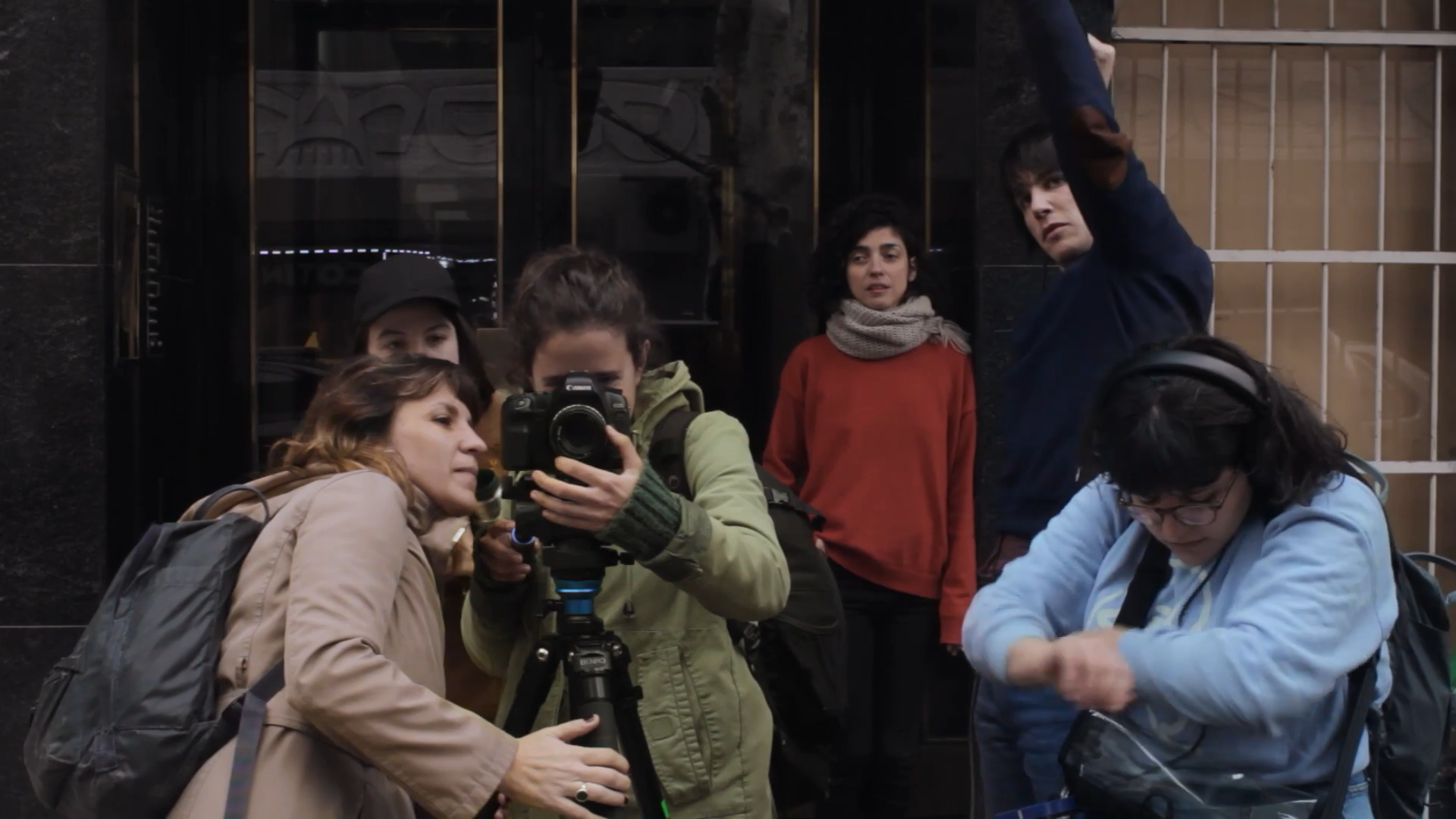
There’s not a method, because I think the method is all the time that you have to understand the film that you have in front of you, to understand what is needed to make that film. As we were speaking before, Las Poetas was a film that I made while I was making Trenque, and they were speaking to each other all the time, but then I became a mother, so it was easier to make Las Poetas, because it was an easier film to make, and Trenque was very difficult to do with a one-month baby. So, life organized cinema and cinema organized life.
The important thing is to understand what you have in front of you and what is needed for that film. Sometimes there are films, they don’t need nothing. They don’t need more than, I don’t know, three people. The films that Mariano was making during these last years, including Popular Tradición de esta Tierra, he made them with only a few people. Of course, I was producing, but I didn’t even go to the shootings, because he was with the people: the guy with the camera, a car, and his dog. Nobody else. When you understand that this is what the film needs, you don’t have to do more than it’s needed. Because of that, the industry becomes a big problem, because sometimes the industry is so used to working in a very standard way, they feel that they have to complete items in their Excels. But we don’t need these. In some cases, we don’t need a costume designer. For example, on this scene, we are going to use the clothes of the actors. We don’t need somebody to come and tell us what we have to wear. So this is something you have to understand for each film, for each scene, and then you can start producing.

DIS: Different plans for different projects, yes.
LC: Yes, not all projects respond in the same way to the structures. So each project is a new production structure. Each project has a different approach, so they will take different measures for different films.
DIS: We love Laura Paredes and the actresses of the group Piel del Lava. Can you tell us about your work with Laura, and what is the relationship between the director and the actors within the group? What kind of involvement do the actors have?
LC: Laura [Paredes] is the wife of Mariano Llinás. So, in addition to being an important actress for our group, she is married to one of us. So the relationship, as it also happens with El Pampero, is also a very strong friendship and relationship. That is really crazy, because it implies that work and friendship are always fusing and finding each other. And she comes from the group Piel del Lava, who plays in La Flor. Let’s say it’s a group that works in the same way, who have been friends for many years. And in that friendship, work is forged, and such work also forges friendship, almost in an indiscernible way. I think she understood very well that work with the group. There is something about the group, which is not easy to understand if you don’t live it in first person. And I feel that Laura not only understands, but she has also taught us a lot as a group to work in that structure.
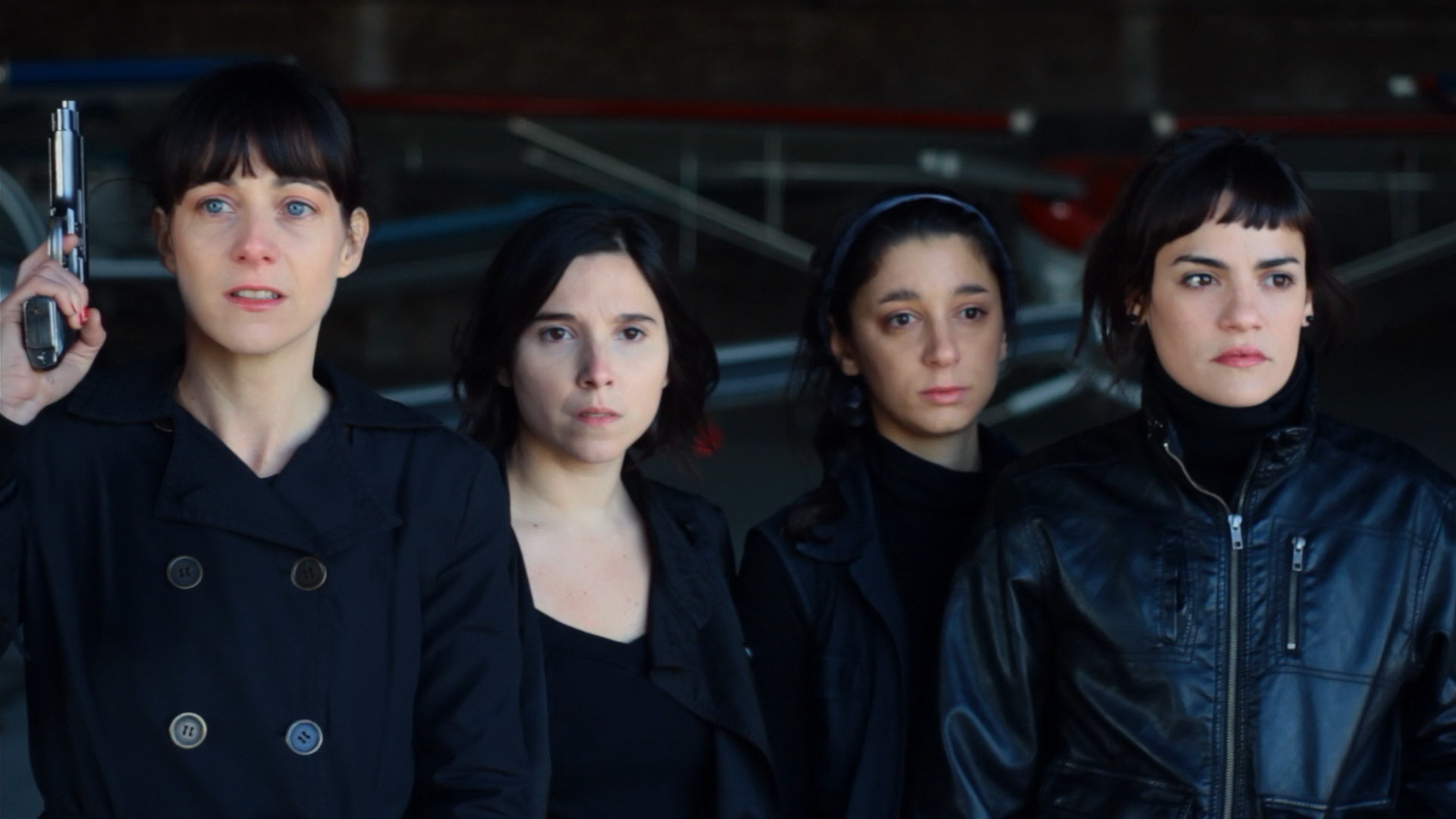
DIS: All four filmmakers of El Pampero have also been actors in the films, and you seemed to be comfortable with being in front of the camera. Even the crews join in at times. That seems to be a very unique dynamic. In a short film you made (also titled Trenque Lauquen), you showed yourself waiting in front of a cinema where Trenque Lauquen, the feature film, is having its premiere at the titular city.
LC: Regarding acting, we do not all have the same relationship with that. In many cases, one appears because he has no other options. In other cases, it is part of the will of the person who directs. There is also something of the ease that represents being able to cover the roles with friendly actors, with one’s own family. But I don’t know if it’s linked only to a production issue. I think it has more to do with decisions to create something different, to try or experiment. I don’t feel so comfortable when I have to act. Or at least not when I’m the director myself. I feel like I’m losing control, that I’m losing track of what should be seen. But as I told you, sometimes we have no other choice. In the case of Carmen Zuna, the character in Trenque Lauquen, it was almost impossible for me not to do it myself.
DIS: We feel like El Pampero is a mixture of cinema and independent theater, like a theater company but with a camera.
LC: Yes, it was funny… We had a very funny story in La Flor that we went to shoot and we forgot the camera. So sometimes even without the camera. [Laughs] We went to shoot, all of us. And when we arrived to the place, we said, “somebody has the camera?” No, nobody has the camera.
DIS: [Laugh] Which episode was that?
LC: It was in the Episode III of La Flor. We went 200 kilometers from Buenos Aires. I was not there. Mariano and our team with two actors. They went to shoot and it was very funny. But yes, it’s like theater for me. It’s like a company, you know, how they work… But there’s something interesting also between the theater companies and the cinema that usually when you learn to make films, it’s more difficult because it’s difficult to make films. It’s more difficult than gathering with a group of friends and preparing a theater play, because you need food, you need technologies, you need more things. I think that El Pampero arrived to ways of thinking this very close to theater. For example, as directors, we can all manage a camera. We can all manage a sound recorder. We can all manage technology. So if we don’t find somebody to do that, we can do it ourselves. In this regard, it’s not needed to be like a professional anymore. All the parts in Trenque Lauquen where I was pregnant was something that my husband shot. He’s not a cinematographer, he’s a producer, also an actor in the film.
Because we prepare a lot in order to have total autonomy when it comes to going out to film. We prepare ourselves to that level, that if we have to deprive ourselves of a technical team, we can do it and go out to film. I think that one thing that we managed to copy from the theater is that in the theater the formation of the actors is created a lot while they do the works. They understand each other as actors, to do works, to rehearse. And in cinema in general, the films are made in a very specific period of life, say in six weeks, in one moment of the year. We are filming all the time, so we manage to make our formation [as filmmakers] also constant. Not only in those isolated moments of lives where we film, but filming is something that is part of our life, what we do in our day to day. That is also a form of training, of learning to make films. I think film is a more complicated form of expression for everyday life, especially since films need to be made in six months. They have more complexity in them.
DIS: We love this idea of “a filmmaker’s formation.” What is El Pampero working on right now and can you share anything about that with us?
LC: I’m not sure. No, because we are working on… I’m writing a film that is going to be shot between Argentina and Italy, but I’m still in the very beginning of the process. We are finishing a film that Alejo Moguillansky directed, that we are trying to finish the editing now in February, so we understand what is best for the film, if we are going to go to a festival or not, if we are going to try to go to festivals before July or after July, depending on the schedule. Then, we have three big projects: directed by Mariano, by Alejo, and by myself, and we have to understand how we are going to move to bigger structures without changing our way of working. I think that’s the big thing now, that we have to find a way to make these films that are more ambitious. As I said before, we have less time to do them, less energy, so we cannot spend ten years making a film, such was in La Flor, or six years like in Trenque Lauquen. We have to discover other way that is more synchronized with this moment that we are living in our lives. But this is something we are going through, so it’s difficult to give you a response. I mean, there are many films surrounding us, it’s just I don’t know what we are going to do first and how we are going to do them. Mystery.
DIS: Do you see El Pampero making television series or more commercial projects?
LC: I still don’t see that we need to go to make commercial films. I still think that we need more time to experiment, to play with shapes, with the form of things. And I think that maybe in the commercial universe of films, this is not something that is allowed. I’m not saying we are not going to make commercial films some days, maybe we will. But I’m not sure that this is the right moment to do that, because we are still trying to find new things to invent. And I think that the industry is not so well prepared to directors with proposals, you know. Everything is very standard these days. I’m not sure we should do these nowadays, because we still feel that we have to discover things, to invent, to do the films that we want to do, to not have a boss, no?
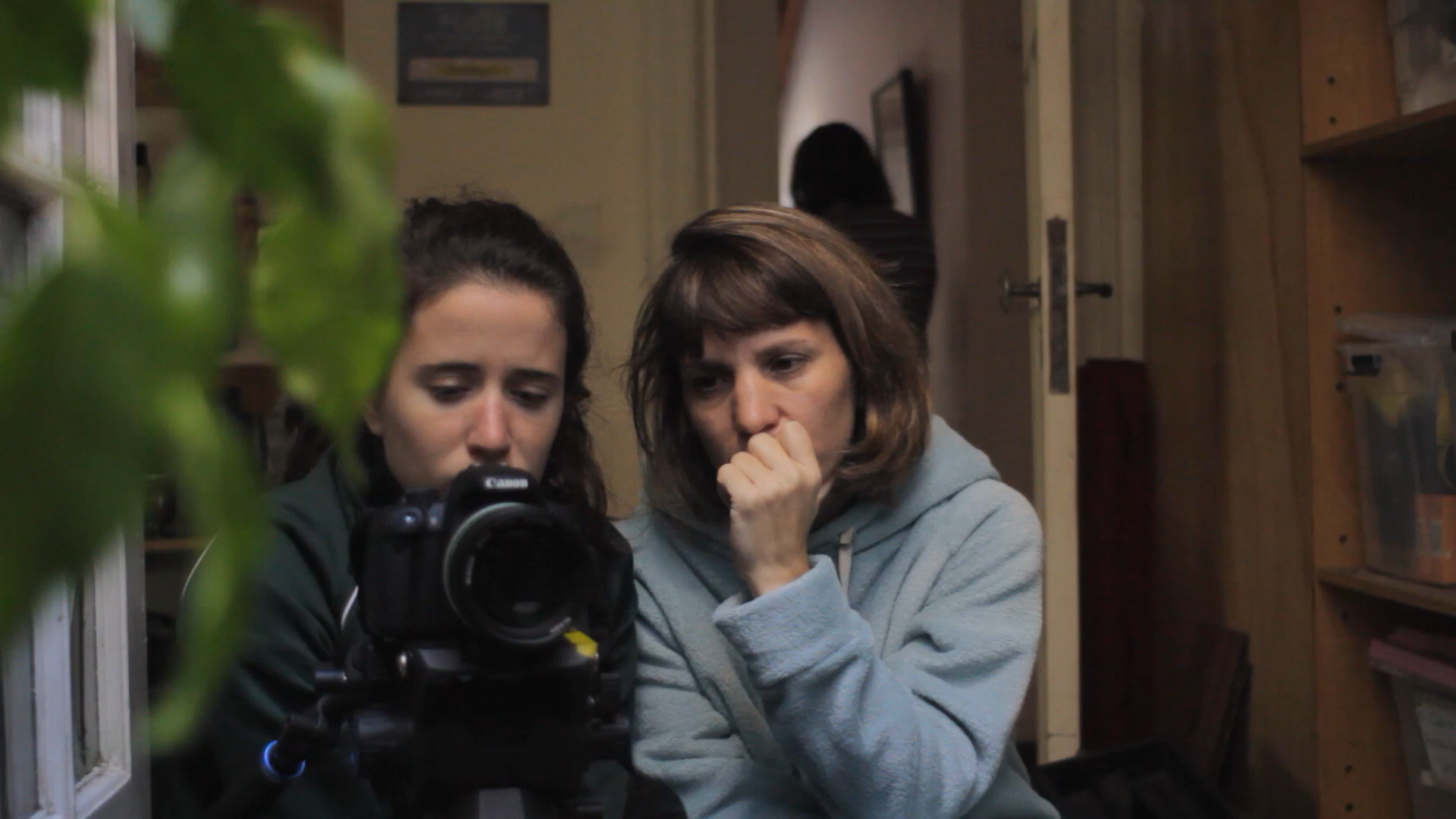
DIS: One thing we always appreciate is how you always keep that Canon DSLR camera from La Flor in all the later films. The camera never changes. And El Pampero, Agustin in particular, seemed to have mastered a kinship with that camera, which is different from people’s usual relationship with technology nowadays, where it is often replaceable every few years when new upgrades come. That kinship is shown in the films as well.
LC: That’s very kind.


留下评论