
This is the first part of a long essay on El Pampero Cine, kindly commissioned by The Dissidents. A condensed version of the text appeared on the website Peliplat.
by TWY
I. Wind from the Pampas
The work of El Pampero Cine, a group of Argentine filmmakers, has been, since the new millennium, a transformation of cinema from a mere narrative or informational (documentary) medium to one that integrates itself with fiction and history – an encyclopedic approach to art and the world, found in the simplest of means. It is also a story of friendship, of the filmmakers working together: Laura Citarella, Mariano Llinás, Agustín Mendilaharzu, Alejo Moguillansky, as well as others, friends and families that extend to other collectives. Their first entrance into the international cinema scene was Historias extraordinarias (2008), Llinás’ four-hour micro-budget narrative labyrinth. Made without state funding and shot with a Mini DV camera, the film harbors a desire for fiction and metamorphosis, which became a signature of the collective. A decade later, films like Trenque Lauquen (2022, Citarella), La edad media (2022, Moguillansky & Luciana Acuña), and La Flor (2018, Llinás), one of the longest fiction films in history, would breathe that same air of lightness and playfulness, offering gateways to more works and stories that form an interweaving world. Their films are those of a travelers, and for twenty years, they have been sending those postcards. When filmmakers travel, they do so as a company, and every object encountered invokes a world to be seen. Stories no longer move on the linear highway of conventions; rather, they move like the traveling winds across the Argentine pampas, an image from which came the word “Pampero.”
For most actions of alternate cinemas, from the surrealists of the 1920s to “Third Cinema” movements bloomed in Latin American countries, the dominance of narrative cinema, in its aesthetic and political terms, had been their primary adversary, but for El Pampero, this disillusionment towards fiction has since become a site for reconstruction. Using cinema to tell stories, under their work, has gone from being a function to becoming an act. It is a cinema that returns to the basics, where quotidian objects – faces, landscapes, a tree, pages of a book, even voices – are filmed with the same intensity as any spectacles. The narrative components that once, in classic cinema, must create an illusion of continuity, which leads to the standardization of production and distribution, now stand a touch further from one another. But the separation of such continuities is only the gateway to a reunion, the commencement of a long journey, the journey of making and projecting a film. This principle of movement and its constant changes of scenery incite the principles of filmmaking: on the one side, the economic situation, the relation with Argentina’s film industry, particularly with INCAA, Instituto Nacional de Cine y Artes Audiovisuales; on the other, the material of cinema, the traversing space and time as stories themselves, in the fiction and the lives of its makers.

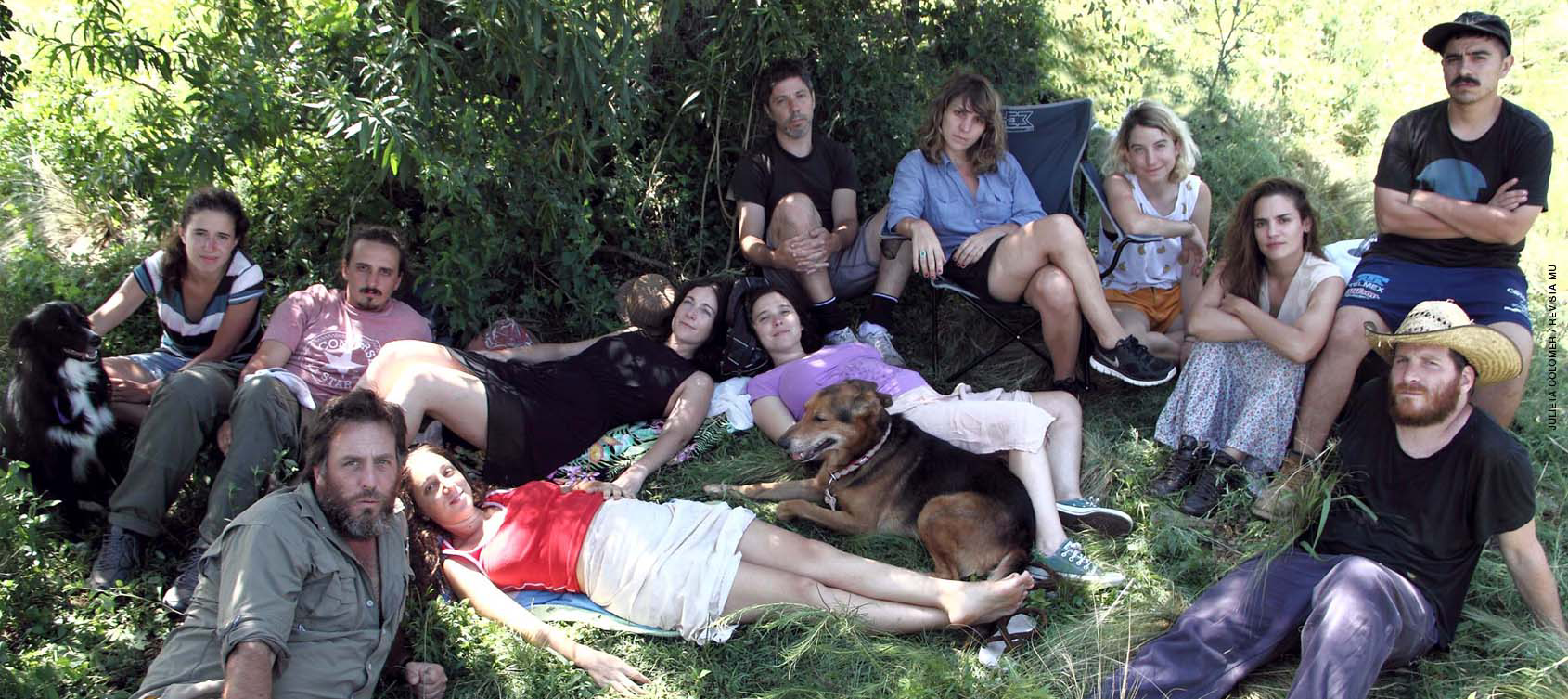
With this spirit of traveling, every form will always remain in the accompaniment of another — a silent performer guided by the rhythm of an offscreen voice, the vastness of the pampas shepherded by a country road, cinema in connection with literature, music, and painting. After all, we are speaking in the terms of a collective, and like many of El Pampero’s films, we begin with one story but will expand into an ever-interwinding narrative of stories, with different individual portraits found within the grand structure, scattered across two decades of work done by this group of filmmakers, now at the peak of their prolificacy. As Argentina’s cultural industry faces unprecedented threats under the government of the newly-elected President Javier Milei, we look at El Pampero’s past, present and future as both the dissident in Argentine cinema, and its most forceful defender. The following is an attempt at mapping this ever-evolving project.
II. Landscape of a Book
What does it mean when we say that El Pampero makes films that can be “read”? For one, reading is a form of seeing, and a good book is always an object inherently cinematographic. In If on a Winter Night a Traveler, Italo Calvino depicted this sensation of book hunting, of someone getting lost amongst shelves upon shelves of materials – sealed, unseen, unread. In his overture to a novel about the searching of many novels, the Italian writer wrote, “Here you are now, ready to attack the first lines of the first page,” but within our hands, it is the book/film that attacks first.1 We are hit with the cover image, the texture of the paper, the typography, the table of contents, etc. These are the first maps we encounter as we become wanderers in an arabesque of signs. We might get lost, but as Jorge Luis Borges said, “The most important thing about an author is his intonation, the most important thing about a book is the voice of the author, that voice that comes to us.”2 This voice is everywhere in a great work, always transcends mere moral lessons or the progression of a story; it announces not simply the “auteur” in the ideological sense but also shows the act of working, of writing, and finally, our reading of it. The Argentine poet, fiction writer, and essayist had also compared reading a book to entering a river, using the old proverb that “one doesn’t enter a river twice.” This particular image, a definitive image that can’t be filmed, which we can call the off-screen, that of the river and the book, the reader and the author, experience and time, is surely the leitmotif that we hold dear with the filmmakers we are talking about today.
However, the real cinematographic problem concerns not just books. The secret, instead, is to invoke a world in the tiniest object possible, from words to images. (Not to be confused with “minimalism.”) A word, for example. “Entonces,” a simple Spanish word. In the third episode of La Flor, the episode of the spies, it is this word that announces the arrival of the narration, intonate by the auteur himself, recognizable because it was also he who had introduced the film, providing his playful raison d’être for an audience who will immerse/commit themselves for the next fourteen hours. The official English subtitle of the film translates “entonces” as “So…”, but a search in a Spanish-English dictionary reveals two more definitions: “then…” or “then, in those days…” Besides the rhythm of this adverb (ehn-tohn-sehs) that fluctuates in the tongue, one sense that anything that begins with this word must carry a time and a space, a mystery, and we are in the middle of it.
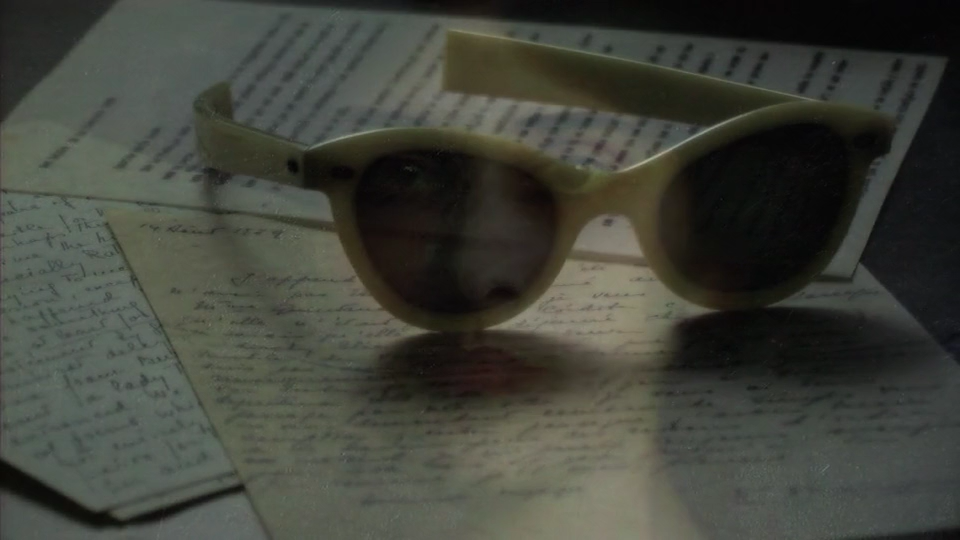
To find a book, one often discovers a library. In 2011, Llinás and Moguillansky were commissioned to make a film about Victoria Ocampo, one of Argentina’s most influential writers and founder of the literary magazine SUR.3 By focusing their cameras on the former residence of the Ocampos, now a museum and library, the filmmakers stage an investigation into the materials left by the great writer. In a modest forty minutes, Tres fábulas de Villa Ocampo (2011) transformed what might have been a museum tour and “biopic” into several fantasies, collapsing all intentions into an act: “A man enters a house.” Seen and heard from the points of view of three (invisible) visitors: a fugitive, a literary “fetishist,” and a detective, the film reveals their fetishism for objects, as the voice-over by Llinás cites revered names that had once haunted the house, captivated by the stillness of photographs everywhere. Another voice by Veronica Llinás, actress and Mariano’s older sister, recites letters of correspondence by Ocampo as the camera lingers in the space of the uninhabited house, soaked in the ever-continuous string quartet by Gabriel Chwojnik. Afterward, a parade of shots constructs juxtapositions between portraits, spines of old manuscripts, calligraphies by luminaries of the 20th century, and slow pans across corridors. It’s a constant gesture of list-making and name-dropping, all too known to cinephiles, a great seduction. Similarly, such references flow through the films of El Pampero, and each film looks back at the histories of literature and cinema that shaped it, although when this obsession became too great, the filmmakers swipe one “visitor” for another. But it is a sensation unlike any other, to quote Citarella, whose films engross this idea, of “something that happens when one reads expansively and suddenly sees oneself passing from one book to another.”4
III. The Great Counterfeiter
Julio Llinás, a renowned surrealist and intellectual, like many Argentinians-Borgeians, saw Paris as the great utopia and had moved there in his youth to pursue a career in writing. Mariano, his youngest son, was born in Buenos Aires in 1975, a time of turmoil before Argentina entered its last military dictatorship. He would turn an adult when his country resumed its reconstruction as a democracy while the collapse of the Soviet Union ended the Cold War, an event that took place so far away that it would seem already like distanced fiction. Now, if young Mariano had never discovered filmmaking – a big “if” considering cinema’s popularity in his country – he’d still be able to discover his talents in creating counterfeits, and his great novel would probably be written by sketching together fabrications of historical documents, police dossiers, fake passports, newspaper clips, and sketches made with colored chalks.
Imagine him a spy, like one of those anonymous, trench-coated men in Hugo Santiago’s Invasión (1969). Based on the writings of Borges and Adolfo Bioy Casares, this seminal Argentine film tells a story of the underground, of people who have already lost, having no idea who the enemy was, but still carrying their revolution in the dark streets of Buenos Aires, renamed as “Aquilea,” after a coastal city in ancient Rome. For young Llinás, if the real underworld of espionage would be an abstraction, then Santiago’s film was surely a reality – a tangible darkness that would infuse a world of cinema later on – in “Aquilea,” everyone is a spy for someone. And if being a spy would seem somewhat far-fetched, Llinás could certainly end up, like his elder Borges, an ingenious librarian, where his mastery for classification could indeed be of use, unless he, who in real life studied anthropology, would reorder his collection to indecipherable new catalogs. Or better yet, he would become a filmmaker. (In 2015, El Pampero would produce Santiago’s final film, El cielo del centauro, with Llinás as co-writer, Moguillansky as editor and many from El Pampero’s extended family aboard.)

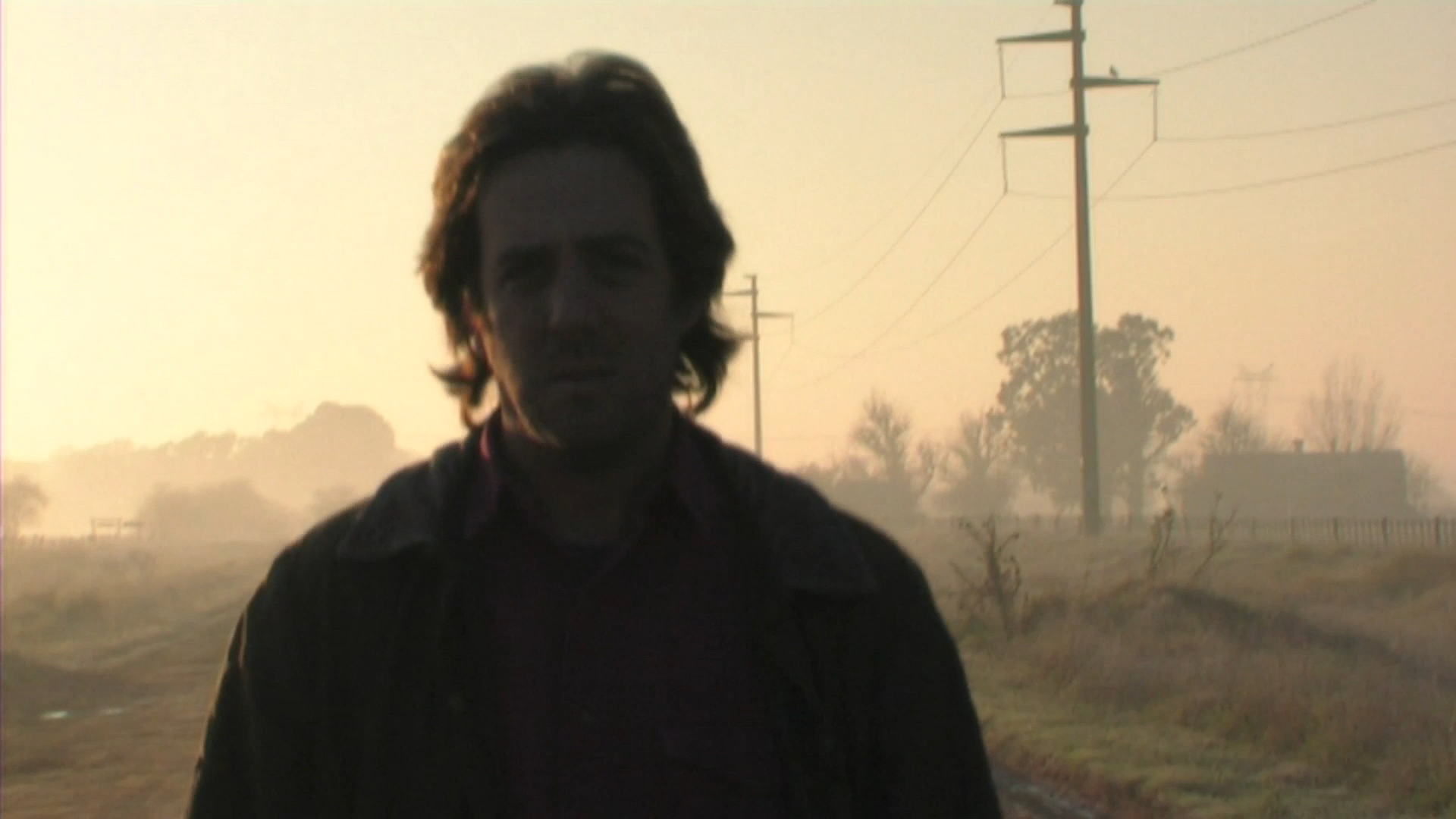
Our half-true biography ends here. In reality, Mariano Llinás, a cinephile since his youth, would spend five years filming the third episode of La Flor, and the six-episode film spread between three parts and took ten years to finish. The third episode, preceded by a mummy B-horror film and a musical “with a touch of mystery,” is a story of a quartet of women secret agents in the twilight years of the Cold War. These agents were played by four actresses, Elisa Carricajo, Valeria Correa, Pilar Gamboa, and Laura Paredes, who assume different characters throughout other episodes of the film. In reality, the actresses are also their own collective, the theater troupe called Piel de Lava. Llinás’ previous film, Historias extraordinarias, also took years to finish. It starred Llinás himself, Walter Jakob, childhood friend and actor, and Mendilaharzu, also the cinematographer, as three men known only as X, Z, and H, in three uncorrelated stories set in provincial Buenos Aires, each encountered secretive materials that plunged them into unexpected journeys. As El Pampero’s first real experiment, the success of Llinás’ film solidifies their mode of production, a two-sided track that morphs easily between ambitious, time-consuming films like La Flor and the more compact and intimate films, particularly with Moguillansky’s work, where the private lives of the filmmakers and their work must coverage and clash. The fact that this one system is producing work in such wildly varied genres and signatures proves El Pampero’s genius.
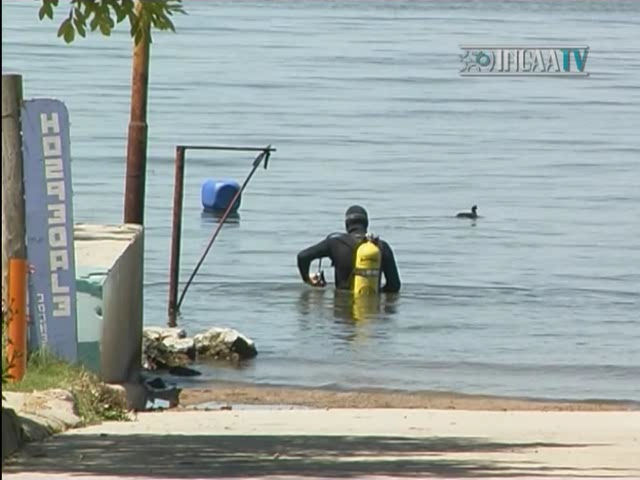
But El Pampero’s first adventure was Balnearios, made in 2002, a mockumentary essay on beach resort towns. Through a somewhat sarcastic voice-over, Llinás, applying his anthropological lens, reveals the burlesque of the landscape’s consumerism while introducing us to different faunas within its population, from the sunbathing men and women to “the observers” that haunt video arcades, as well as artists and stories that took inspiration from it. According to a profile on El Pampero published in Filmmaker Magazine, the film was an unexpected hit in Argentina. It premiered amid the country’s economic crisis and quickly distinguished itself as a controversial subject for its humor and critique. Still, despite its alienating view concerning the country’s “post-dictatorship neoliberalism,” Balnearios was also the prototype of Llinás’ passion for portraiture, with his persistent interest in the temporariness of contemporary spaces.5 This condition would remain with the filmmaker, who roams constantly “on the route, in service stations and provincial hotels.”6 In these ruins of temporary, El Pampero’s first opus repurposed them as meeting places with the potential for transcribing fiction. With the stillness of space and its limitless time, Llinás sets diagonal lines between the concrete world and the written world, between voyages and confinements.
By the time Historias extraordinarias began rolling, the collective was completed by Citarella, a formidable producer “who is able to do anything with any budget,” Mendilaharzu as the chief cinematographer, and Moguillansky as the editor. In subsequent works, these filmmakers would work in different departments on each other’s work. Citarella explains in a new interview published in Cahiers du cinéma: “Changing positions, learning a little bit of everything, that’s part of our training. In addition to directing, writing and producing, I can also hold the camera or act. […] The notion of the technician is therefore transformed within our work.“7 An ever-growing company of collaborators also formed. There are recurring actors, including Piel de Lava, as mentioned earlier; Jakob, a director-producer of his own right; Rafael Spregelburd, also a celebrated theater director; Luciana Acuña, choreographer and partner of Moguillansky; and Verónica Llinás, whose voice is as unmistakeable as her brother’s, also seen in films by María Luisa Bemberg and Martín Rejtman. There are artisans, particularly Laura and Flora Caligiuri, art and costume designers, respectively, whose hands are responsible for masterful counterfeits; musicians, notably Chwojnik, whose work is unmistakable. Individuals aside, despite their willful renunciation towards the national INCAA, El Pampero’s success was aided by several allies, all integral within the ecosystem of the independent Argentine cinema: Universidad del Cine, alma-meter of Llinás, where he currently teaches; Buenos Aires Festival Internacional de Cine Independiente (BAFICI), which hosts premieres of many El Pampero films; Museo de Arte Latinoamericano de Buenos Aires (MALBA), the art space where long-term screenings are held, often lasting for months for a single film, beyond the limit of commercial multiplexes. Finally, through their encounters and collaborations with various independent Argentine artists across the board, from theater troupes, dance groups to musicians and painters, El Pampero sees their affinities as “a true example” for “all the forms of organization which adopt respect the lives of the people who do the work.”
To find each voice in a song is to investigate each band member, and to write the story of El Pampero Cine is to extend the passion for telling never-ending stories. In the second part of this essay, we will examine Historias extraordinarias, La Flor, and Trenque Lauquen, the three magnum opuses of the collective, with more substantial detail. In the third part, we will examine the rest of their filmographies, where cinema becomes a playground to explore the tensions between art, work, commerce, and identity. Let us all dive into this infinite cobweb together.
(To be continued.)
- Calvino, Italo. If on a Winter Night a Traveler. English translation by William Weaver. A Helen and Kurt Wolff Book. Pg. 9. ↩︎
- Borges, Jorge Luis. “El libro.” Borges Oral. Akhenaton. ↩︎
- Her sister, Silvina Ocampo, a celebrated poet, was the subject of a documentary, Silvina Ocampo: Las dependencias (1999), directed by a young Lucrecia Martel, before La ciénaga. ↩︎
- Koza, Roger. “La mujer de los relatos.” Con los ojos abiertos. https://www.conlosojosabiertos.com/la-mujer-de-los-relatos/ ↩︎
- Brodsky, Samuel. “The Pampero Cinematic Universe: 20 Films in 20 Years.” Filmmaker Magazine. https://filmmakermagazine.com/120978-the-pampero-cinematic-universe-20-films-in-20-years/ ↩︎
- Koza, Roger Alan. “Las sorprendentes aventuras de Mariano Llinás.” Con los ojos abiertos. https://www.conlosojosabiertos.com/las-sorprendentes-aventuras-de-mariano-llinas/ ↩︎
- Ganzo, Fernando. “L’odyssée d’El Pampero – Entretien avec Laura Citarella,
Mariano Llinás, Agustín Mendilaharzu et Alejo Moguillansky.” Cahiers du cinéma, Mars 2024, n°807. ↩︎

留下评论