
by TWY
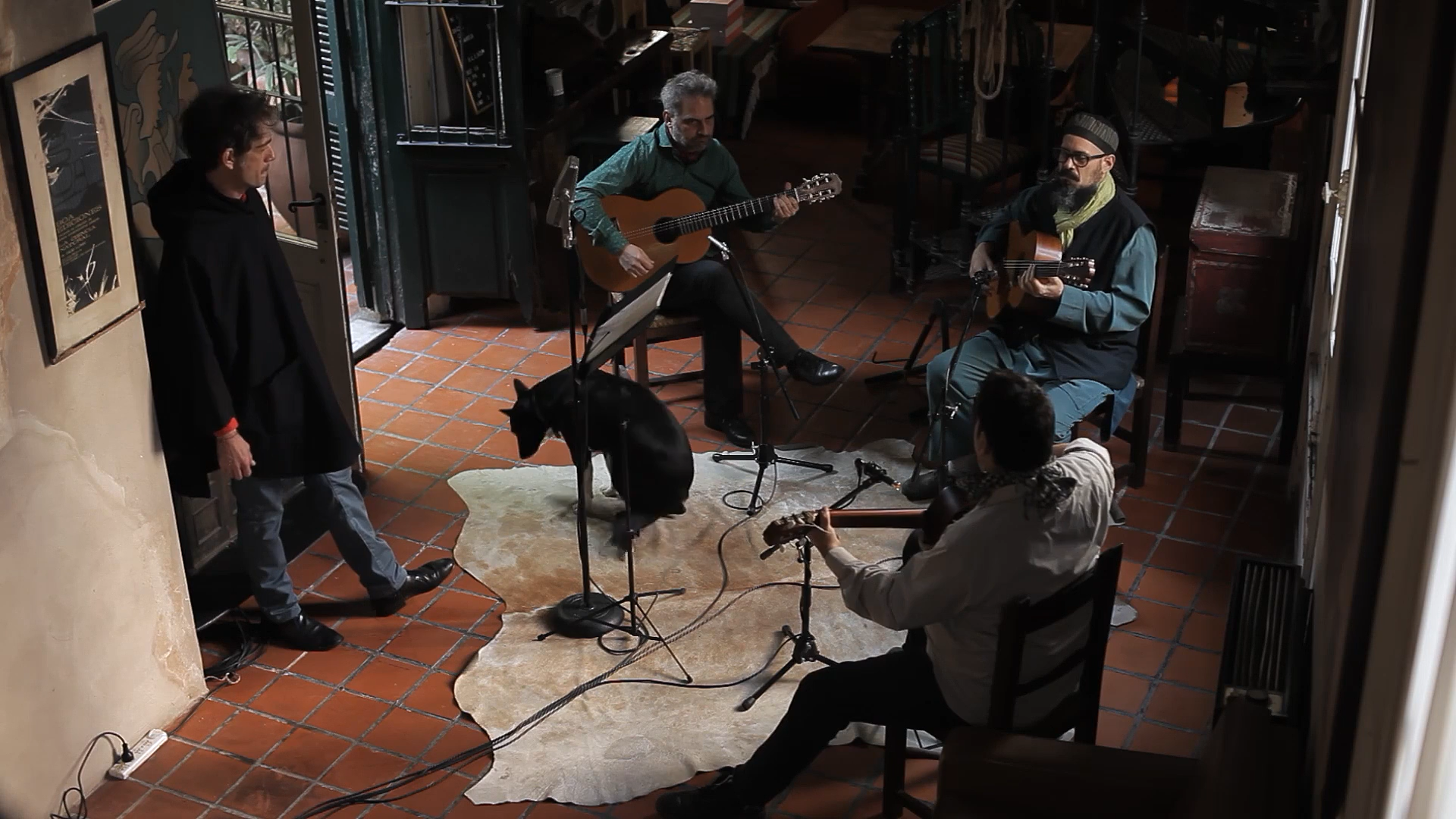
Mariano Llinás, the freest filmmaker of our time, with his friends, rerecords an old “tango” album: Corsini interpreta a Blomberg y Maciel. Naturally, we are greeted with a film not only with music, which he filmed faithfully, but yet another labyrinth of histories, characters and events – materialized as the voice of music, discourses between artists, accounts from distant past and the urban space of Buenos Aires. Texts will be cited and remapped with the original material – the music, for anything that exists on screen must exist materiality or be challenged by the notion of fiction. The fact that the film and its source material concerns so strongly with an Argentinian history so secretive made for evermore intense discovery and, at the same time, alienates its potential with the international festival “bubble” – Llinás couldn’t care less, for his film only acts upon its material, and only that material. The joy of making art, Llinás’ work is.
Once again, the premise of one film leads toward many others, and things don’t end really – they are simply left unrecorded. Llinás, whose flow of life is made from the Spanish language and an eternal fascination for everything romanesque, strengthens further the idea of off–screen dialogue, more Platonic than that in the third part of La Flor (2018), which serves as both the film’s rhythm, thought and afterthought. Time itself intersects, in the same way the album by Corsini bridged history, which justifies the filmmaker’s passion for his narrating, or his recording of the journey to find the shot, unfiltered with the film’s vehicular scenes à la Geschichtsunterricht by Straub/Huillet. Just as La Flor, we are witnessing the film’s creation as it plays, but also from the point of view that came after that creation.


留下评论