
by TWY
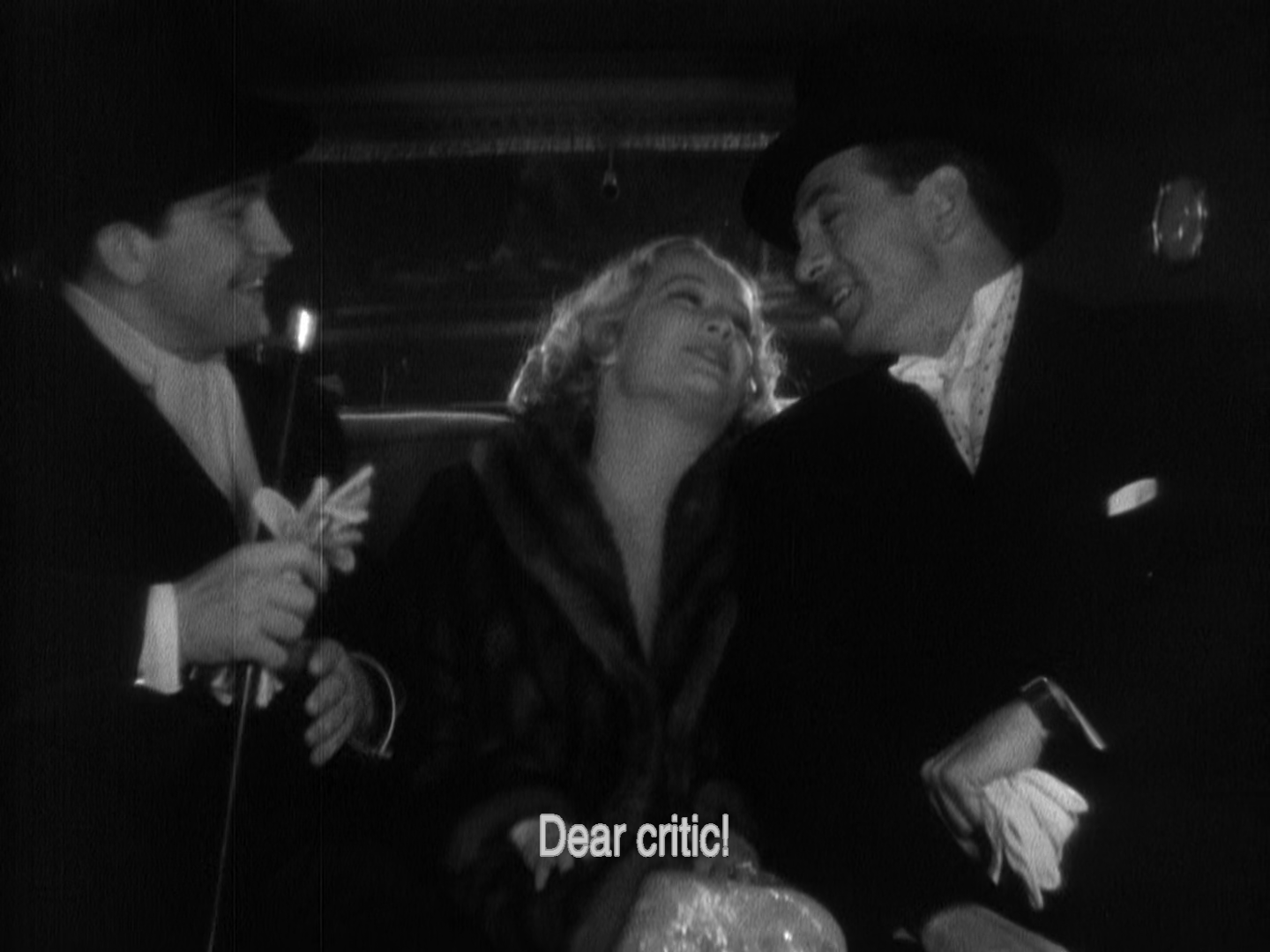
Throughout Ernst Lubitsch’s pre-code masterpiece Design for Living (1933), the characters opens, walks across or closes a door for a total of sixty-nine times, and each time a door is crossed, a person is making a choice. Yes, all it takes is to walk across a door. With Lubitsch, the choices are always with the characters, and that’s high-class comedy. If there is a school of cinema representing true decency, this is that film. If it remains the supreme model for a true ménage à trois, it’s because Lubitsch had made the most naked and the most youthful of a film in which all parties are simply unable to hide anything, and must all share equal senses of emotions, humor, virtue and class consciousness, and anyone who lies and conceals are ultimately damned, all displayed marvelously through that play of differences, repetitions and dialectics. As a matter of fact, Lubitsch considers the act of hiding rather undesirable and sexually unappealing: the household rubbish that hid beneath George and Tom’s armchair was swiftly exposed, proving that they’re no concern for our heroine with her frankness to confess. Even the slow-burn courtship in The Shop Around the Corner (1940) or the cheeky hide-and-seek game in To Be or Not To Be (1942) seemed paled in comparison to Design for Living’s raw power of openness. It’s a film completely open to any relationships (even the ones that we hate to see, even advertising) and never allows itself to descend into chaos, hence Gary Cooper’s furniture-smashing was played offscreen, and the act must be rendered through the words of Fredric March as if he alone purifies it, the gesture of a true friendship under the disguise of insults.
If the advertising goon Max Plunkett (Edward Everett Horton, a regular in Lubitsch’s band) was so disturbed by hearing his signature slogan on immorality (and monogamy) in Tom’s play, it is because the playwright sees it just as another funny line inherent of his comedic sensibility, and by doing so, stripping the words of meaning and context. Mr. Plunkett laughed anyway. It proved Max nothing, just as it didn’t prove anything back in Paris, but transformed only as a gesture to allow the two friends an opportunity to be open about their desire for Gilda, the as-always superb Miriam Hopkins, who is the synthesis of fluidity in Lubitsch’s cinema. Her occupation as a “commercial artist” thus is no material for sarcasm, rather a reaffirmation of her class and true alliance. That she is able to exploit her salesmanship to the benefits of our stubbornly artistic duo proves her strength, for she’s the one that’s more aware of advertising’s dangerous potential to weaken the art of criticism, or in Jean Douchet’s words, the art of loving, or “the art of loving the art of loving,” l’art d’aimer l’art d’aimer. Gilda critiques because she loves and cannot pick a side. That the superficial success of George’s painting or Tom’s theatrical career didn’t prevent their exile to China further confirms this.
Perhaps it’s debatable that Design for Living is Lubitsch’s best film, it’s certainly the one that played the least tricks and still effortlessly funny, all in the glorious yet modest staging between the three actors (plus occasionally Plunkett, his marriage license – which Lubitsch displayed in closeup like a district attorney, and offscreen with a certain Mr. Egelbauer, forming a somewhat more sinister threesome). It’s the most generous of film, of art. It doesn’t sell any archetypes, it only shows how things work, no obsessions, and yet it flows like a mystery or a fairytale, and every time our trio shared the frame, it sparks a bolt of lightning. If the film has to end rather abruptly, because it could go on forever if otherwise.

留下评论